Choosing the right flag fabric can affect much more than appearance. The material determines how your flag handles wind, displays your design, and holds up through repeated outdoor use.
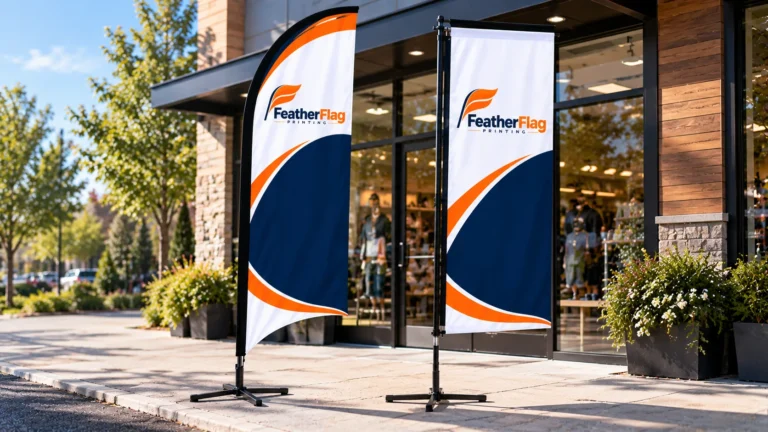
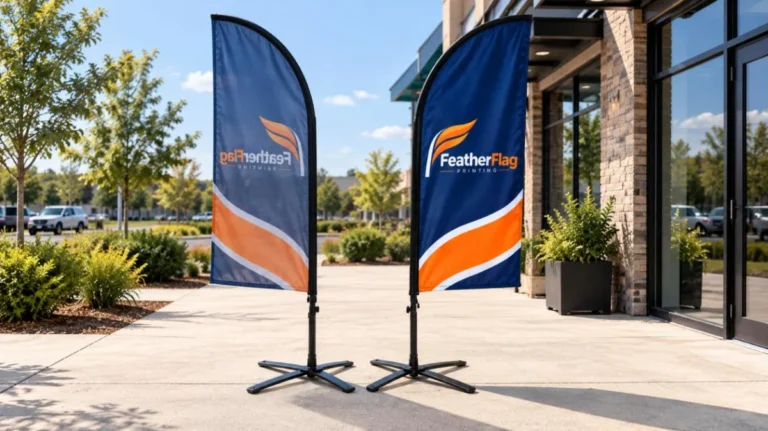
Polyester and Mesh are both useful outdoor fabrics, but they are built for different conditions. Polyester focuses on vibrant colour, solid print coverage, and everyday durability, while Mesh is designed to let air pass through when wind becomes a bigger concern.
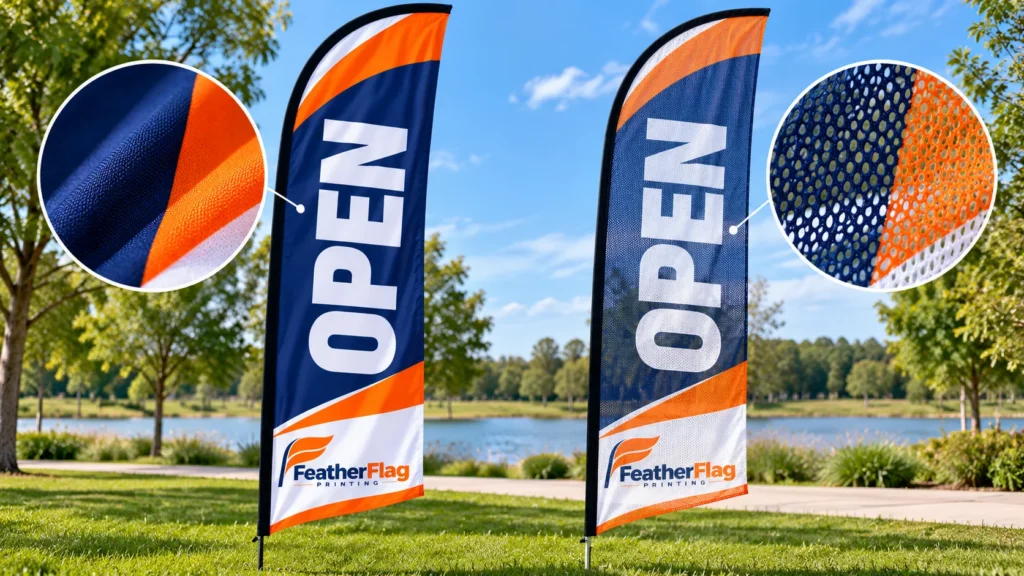
Polyester is the better all purpose fabric, while Mesh has the advantage when wind is the main challenge. Polyester gives you stronger colour and a more solid print, making it suitable for most everyday advertising. Mesh sacrifices some print density to let air through, making it better suited to exposed locations where strong wind can place extra stress on a solid fabric.
Why Polyester Is the Popular Choice
Polyester is one of the most widely used fabrics for outdoor advertising flags because it offers a practical balance of durability, print quality, flexibility, and cost. It produces vibrant colours and clear graphics while still allowing the flag to move naturally outdoors.
It works well for retail stores, restaurants, dealerships, schools, real estate agencies, and event spaces where normal outdoor conditions are expected. For a sheltered or moderately windy location, Polyester is often the straightforward choice.
Why Mesh Performs Better in Wind

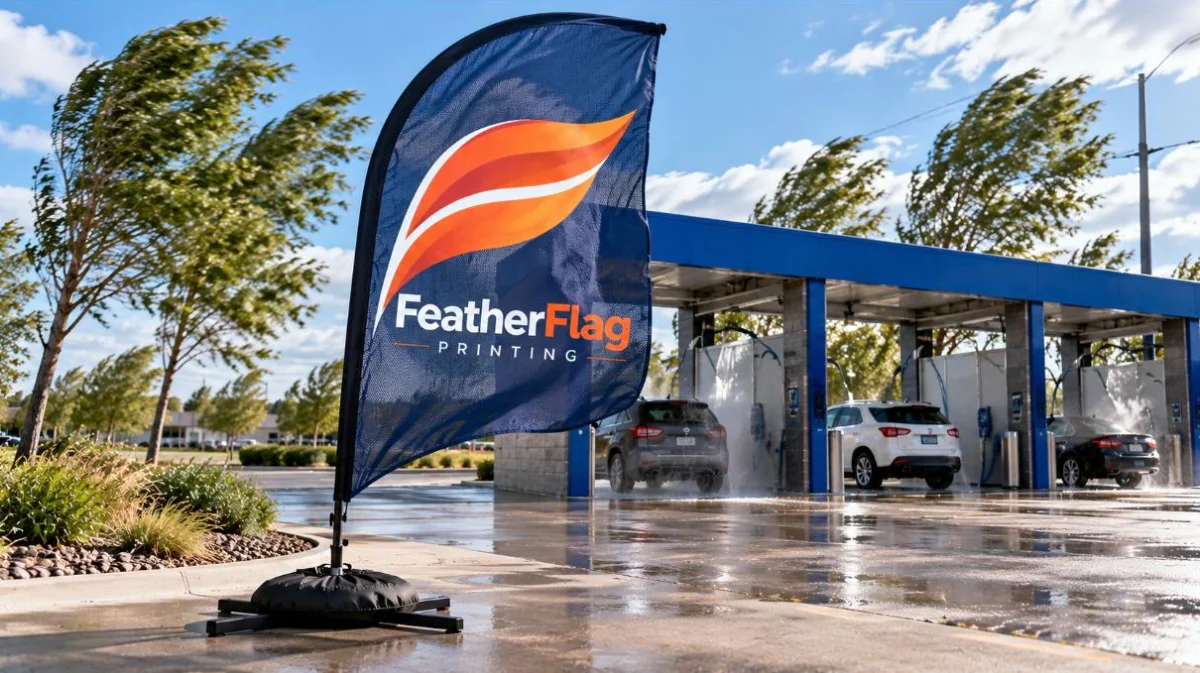
Mesh is designed with small openings that allow air to pass through the fabric. Instead of catching wind like a solid surface, the material reduces some of the pressure placed on the flag, stitching, and pole.
This makes Mesh particularly useful for coastal businesses, rooftop displays, marinas, sports venues, and open event spaces. When strong or unpredictable wind is a regular part of the environment, allowing air to pass through can help reduce repeated stress on the display.
Where Polyester Falls Short
Because Polyester is a solid fabric, it catches more wind than Mesh. In locations exposed to constant strong or gusty conditions, that additional pressure can contribute to greater wear on the fabric and seams over time.
For example, a restaurant on a sheltered high street may have no issue using Polyester, while a beach café exposed to coastal winds may benefit more from Mesh. The difference is less about which fabric is stronger and more about which one is better suited to the environment.
Where Mesh Falls Short
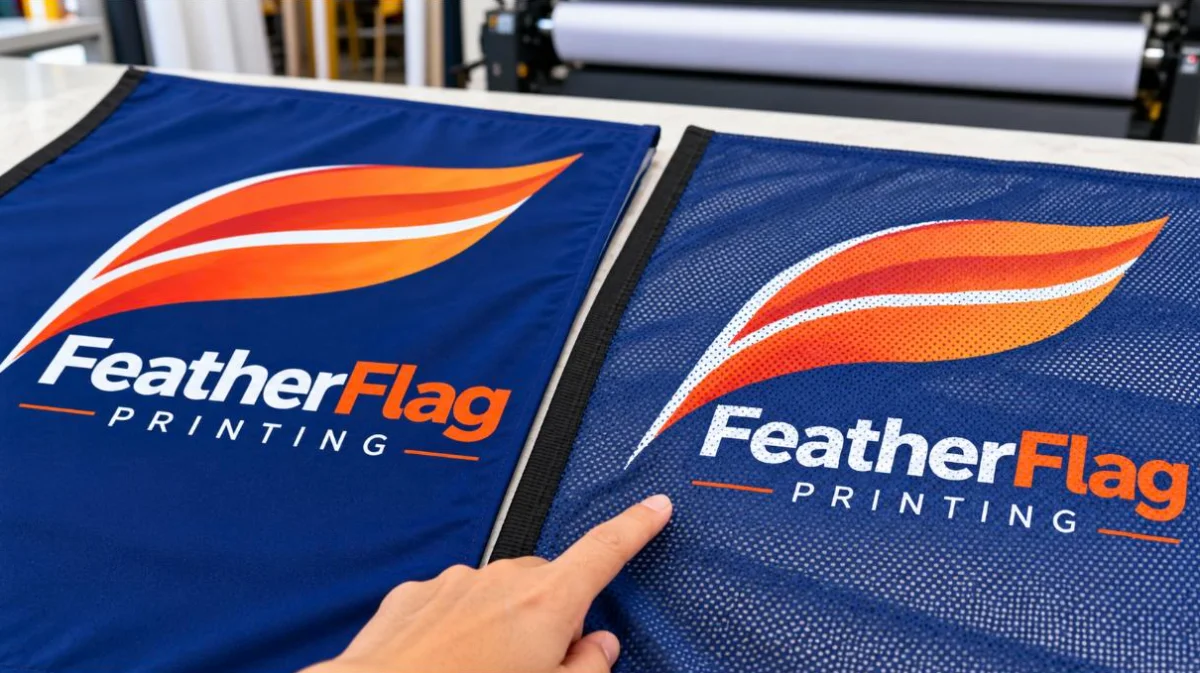
Mesh solves a wind problem, but it comes with a tradeoff. Its perforated surface can make colours and fine details appear slightly less solid than they would on a standard Polyester flag.
That may not matter when wind handling is the priority, but it can be important for businesses that rely heavily on bold branding or detailed graphics. In a sheltered location, choosing Mesh may also provide little practical advantage over Polyester.
Does a Higher Price Mean Longer Life?
Not necessarily. A higher price may reflect heavier fabric, better construction, or higher print quality, but the right material for your location matters more than choosing the most expensive option. A standard Polyester flag can perform well in normal conditions, while quality Mesh can be a smarter investment where strong winds are common.
Fabric weight also plays a role in durability. Heavier Polyester can be suitable for longer term outdoor use, while lighter materials may work well for temporary promotions and events. Consider the fabric quality, local weather, and how often you'll use the flag before deciding whether a higher priced option is worth it.
Which Fabric Should You Choose?

Start with the conditions your flag will actually face.
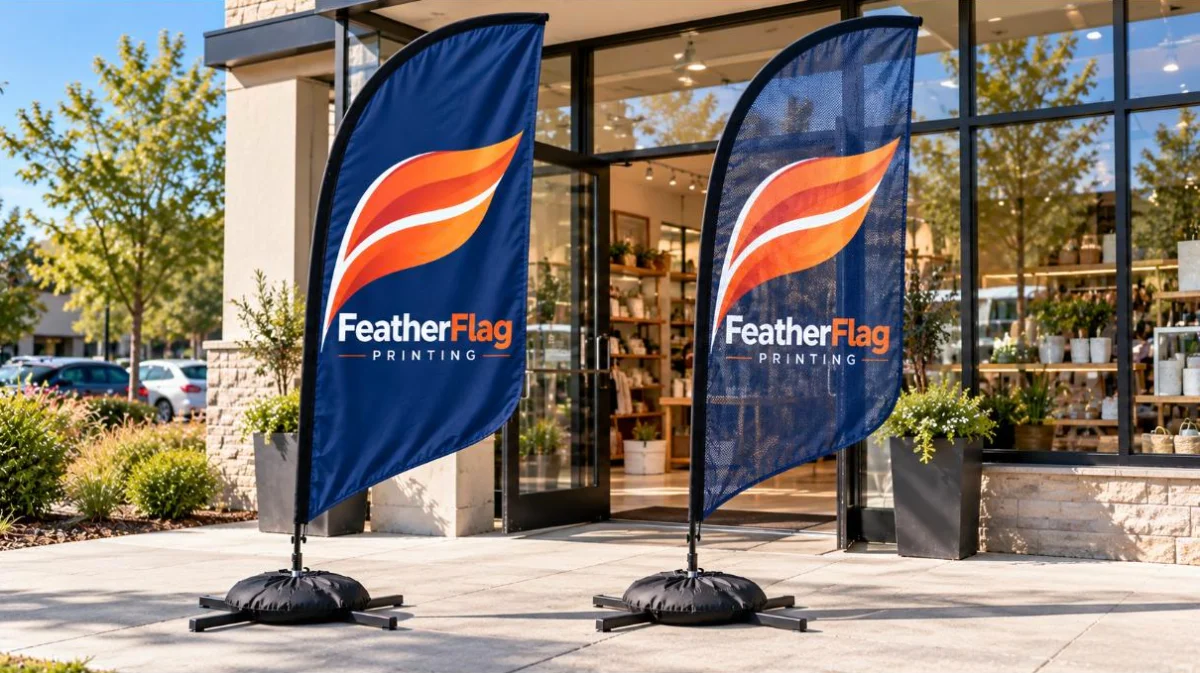
Choose Polyester when vibrant colours, strong print coverage, everyday outdoor use, and value are your main priorities. It is well suited to storefronts, restaurants, dealerships, schools, and sheltered event spaces.
Choose Mesh when strong or unpredictable wind is a regular concern. Its breathable construction makes it useful for coastal areas, rooftops, open fields, and other exposed locations where reducing wind pressure matters.
Polyester vs Mesh: At a Glance
| Feature | Polyester | Mesh |
|---|---|---|
| Print Appearance | Strong and vibrant | Clear with a perforated finish |
| Wind Handling | Moderate | Excellent |
| Airflow | Limited | High |
| Colour Appearance | Vibrant | Slightly less solid |
| Everyday Outdoor Use | Excellent | Very Good |
| Strong Wind Conditions | Good | Excellent |
| Best Environment | Normal outdoor conditions | Windy and exposed locations |
| Main Advantage | Colour and versatility | Reduced wind pressure |