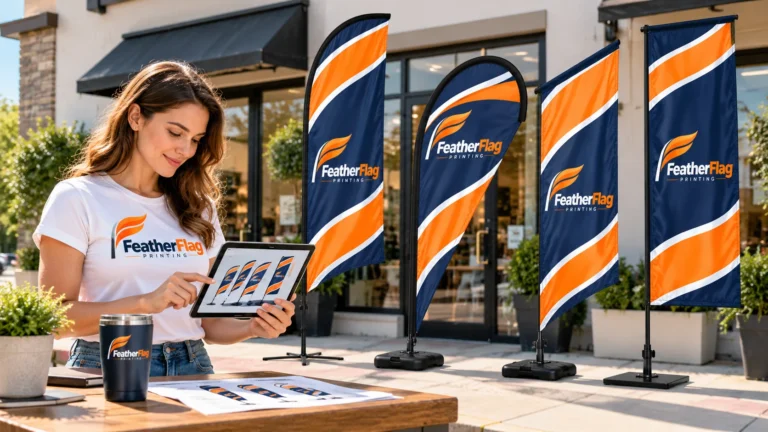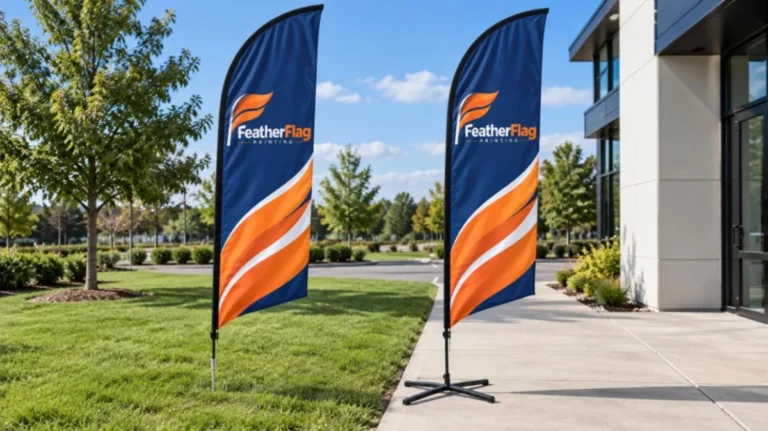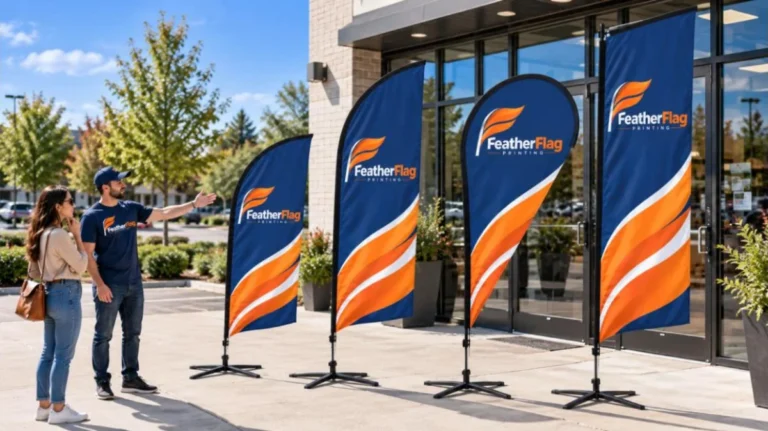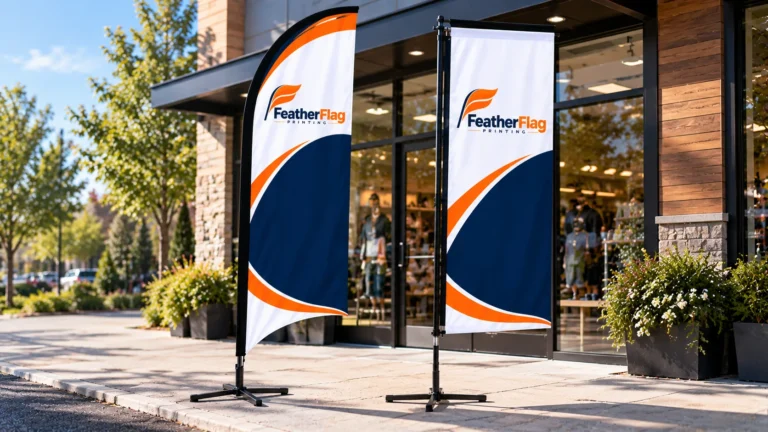
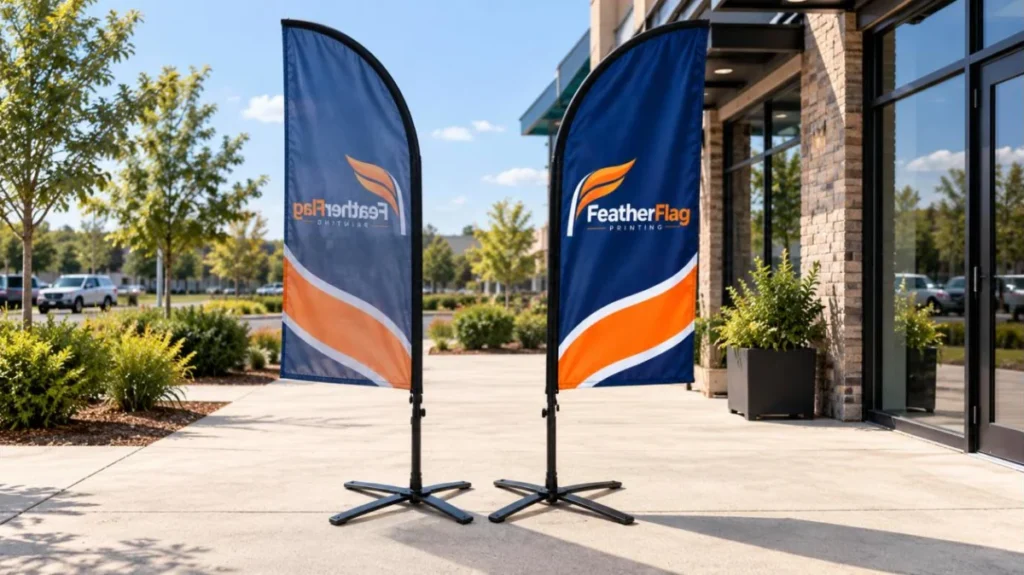
Choosing between a single sided and double sided feather flag is not simply about picking the more affordable option. The right choice depends on where you will place the flag, how people will approach it, how much information you need to display, and how important correct reading from both sides is.
A single sided flag can be a smart choice for a straightforward promotion viewed mainly from one direction. A double sided flag can make more sense when people approach from different directions and both faces need to communicate clearly.
The Short Answer
Choose single sided if your audience mainly sees the flag from one direction and you want a lighter, more economical display.
Choose double sided if your flag will be viewed from multiple directions or your message needs to read correctly on both sides.
What Is the Difference?
The main difference is how each flag is constructed and how the artwork appears from the reverse side.
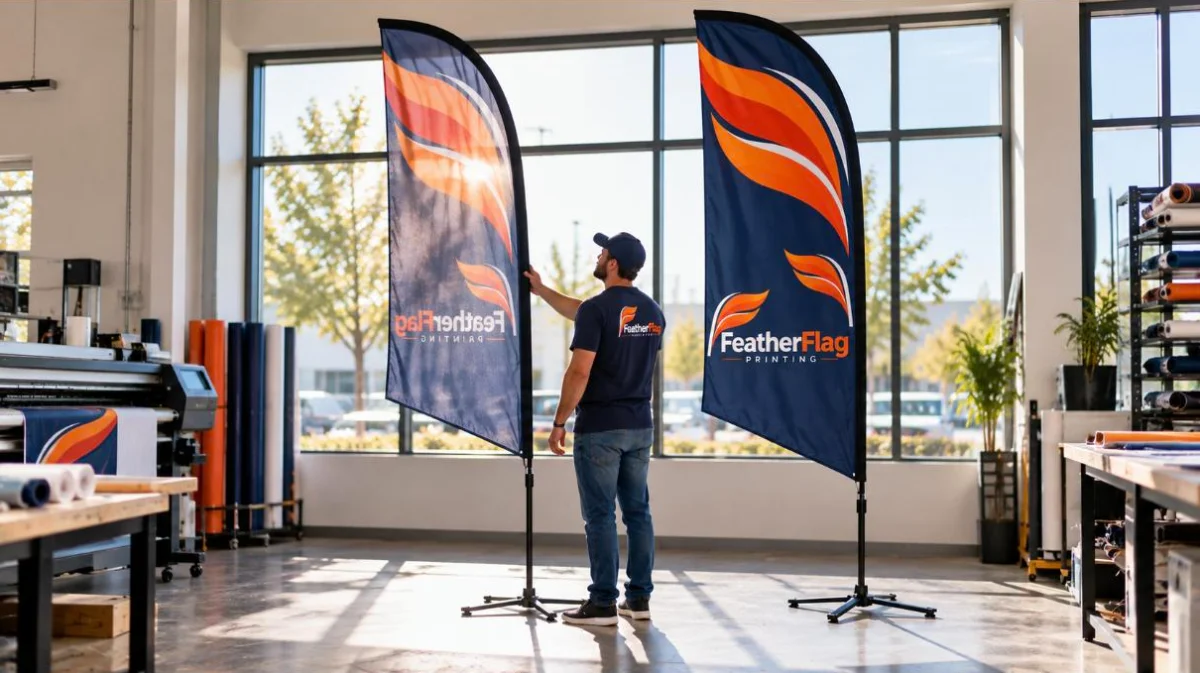
A single sided feather flag uses one printed fabric layer. Light can pass through the material, allowing the design to remain visible from the back, but the artwork generally appears mirrored.
A double sided feather flag uses two printed faces with a blockout layer between them. This limits the amount of light and artwork passing between the two faces, allowing each side to display the design correctly.
| Feature | Single Sided | Double Sided |
|---|---|---|
| Fabric construction | One printed layer | Two printed faces with a blockout layer |
| Reverse appearance | Mirrored | Correctly oriented |
| Weight | Lighter | Heavier |
| Movement | Generally more responsive | Additional weight can reduce movement |
| Artwork | Same design viewed from both sides | Same or different artwork |
| Cost | Usually lower | Usually higher |
| Best suited for | One main viewing direction | Multiple viewing directions |
What Will People See From Behind?
With a single sided flag, the reverse side can still show the printed design because the ink is visible through the fabric. However, words and graphics can appear reversed.
For simple messages such as SALE, OPEN, or a basic logo, this may not cause much concern. The situation changes when your design includes information that depends on correct orientation.
A phone number, website address, QR code, or directional arrow needs to make sense regardless of which side someone sees. In these situations, double sided printing can provide a clearer experience.
What Happens Inside a Double Sided Flag?
A double sided flag uses additional material to separate the two printed faces. The blockout layer helps reduce light and artwork passing through from one side to the other.
This gives each face a more independent appearance and allows the artwork to remain correctly oriented.
The construction also gives you another option. Depending on the product and supplier, you may be able to use the same design on both sides or create separate artwork for each face.
That flexibility is useful when one location needs to communicate different messages to people approaching from opposite directions.
Does Weight Affect How the Flag Moves?
Yes. Construction can influence how freely the fabric responds to airflow.
A single sided flag uses less material, making it lighter and generally more responsive to available airflow. This can help maintain the movement that makes feather flags noticeable.
A double sided flag contains additional layers, so it is heavier. The extra weight can affect how readily the fabric moves, particularly when airflow is limited.
This does not mean that double sided flags cannot move well. The actual result depends on the flag size, fabric, pole system, weather, and location.
Where Will People See Your Flag?
Before choosing the print type, look at your actual location.
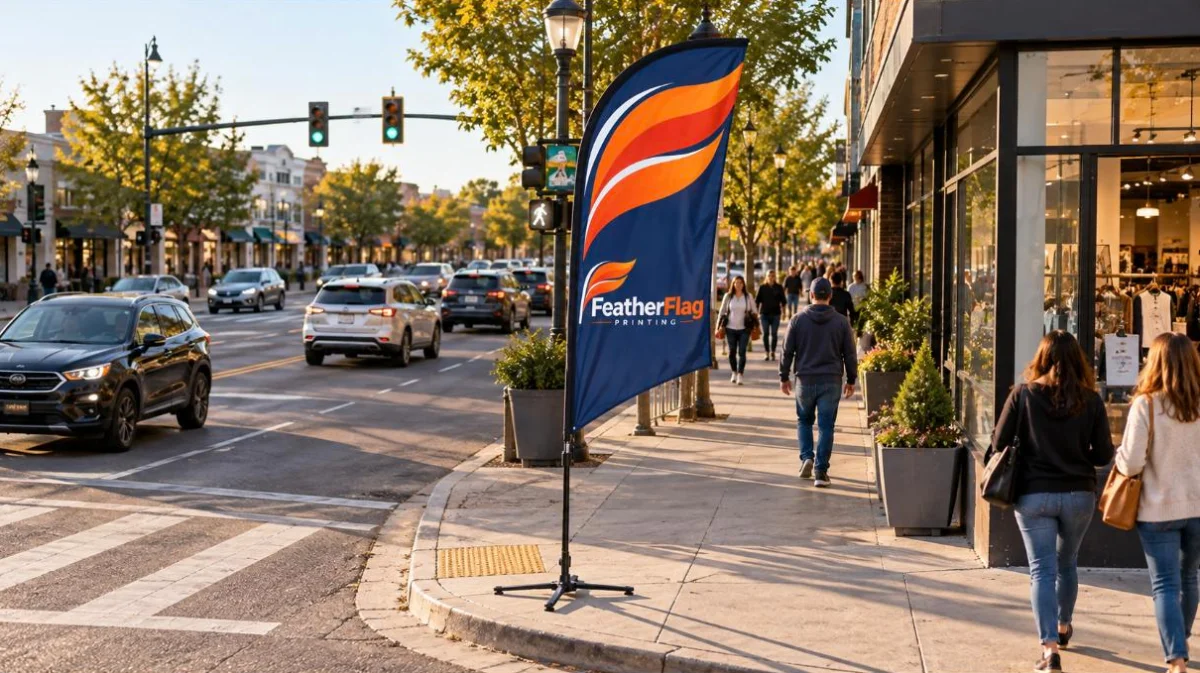
A flag facing a storefront entrance may mainly be seen by people approaching from the parking area. A flag placed in an open walkway can have people coming from either side.
Think about the viewing pattern rather than simply asking which option is better.
If one direction clearly matters most, single sided may be enough. If both directions bring potential customers, double sided deserves more consideration.
Which Flag Fits Your Setup?
Your location, message, viewing distance, and budget can quickly narrow down the right choice.
| Your Situation | Better Option to Consider |
|---|---|
| One main viewing direction | Single sided |
| Multiple viewing directions | Double sided |
| Short and simple message | Single sided |
| Phone number or website that must read correctly | Double sided |
| Directional arrows or QR codes | Double sided |
| People viewing the flag from close range on both sides | Double sided |
| Large quantity with a tighter budget | Single sided |
| Open area with traffic on both sides | Double sided |
| Flag positioned beside a wall | Single sided |
| Indoor or outdoor use | Depends on viewing direction and setup |
This is not a strict rulebook. Your flag size, artwork, location, and intended use should all be considered before ordering.
When Single Sided Makes More Sense
Single sided is often the practical option when most viewers will approach from the same direction.
It can work well outside a storefront, along a roadside with one main traffic direction, or beside a wall where the reverse side has limited value. It is also worth considering when you need several flags for a promotion and want to keep the overall purchase cost lower.
For short messages and simple graphics, the mirrored reverse side may not create a meaningful problem.
When Double Sided Is Worth It
Double sided becomes more valuable when both faces of the flag have an audience.
An open parking area, busy walkway, event space, or trade show aisle can expose the flag to people approaching from different directions. In these situations, having correctly oriented artwork on both sides means fewer viewers encounter a backwards message.
It is particularly useful when the design contains information that needs to be read exactly as intended.
Can You Use Different Designs on Each Side?
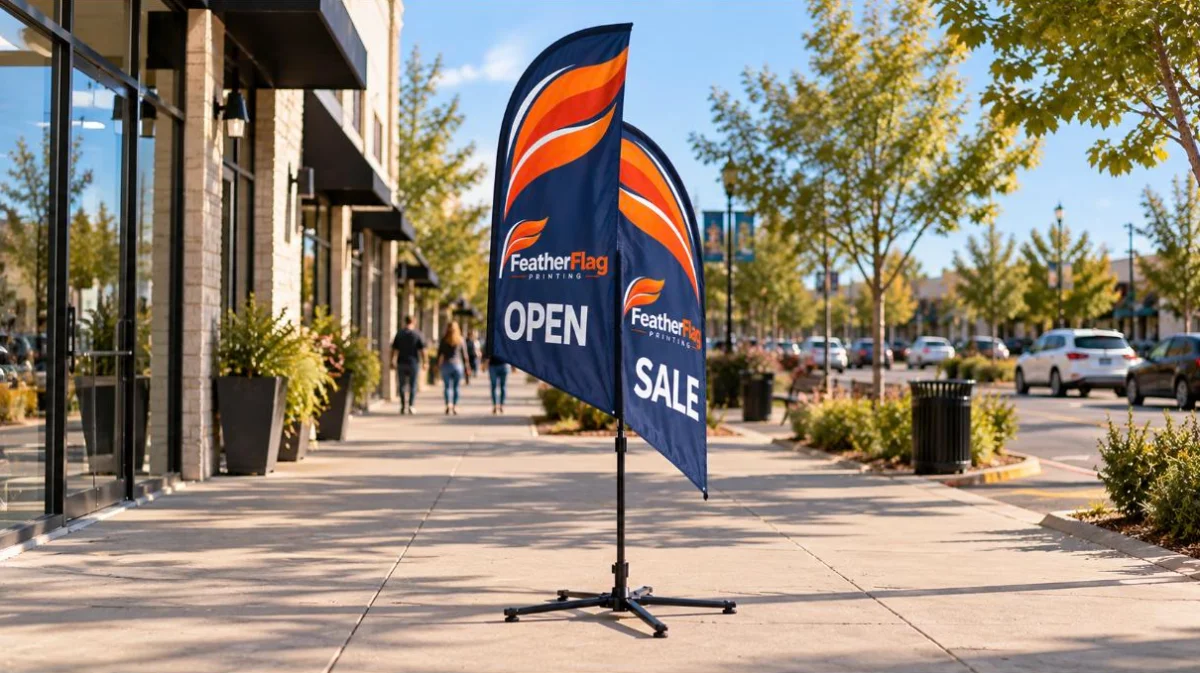
Depending on the product, double sided flags can support different artwork on each face.
This gives businesses more room to create a useful two way message. One side could promote a Grand Opening, while the other provides a directional instruction. A business could also use one side for a current promotion and another for a broader brand message.
Before ordering, confirm whether the supplier allows separate artwork for each face and whether there are specific artwork requirements.
How Does Cost Affect the Decision?
Single sided flags are generally less expensive because they require less material and simpler construction.
Double sided flags require additional fabric and a blockout layer, which increases production costs. However, a higher price does not automatically make double sided the better purchase.
Ask yourself whether the second readable face will actually be seen. If customers mainly approach from one direction, spending more on a second printed face may provide little additional value.
If both sides receive regular traffic, the additional investment can be more useful.
Think About Your Actual Viewing Situation
The easiest way to choose is to look at your location from the customer’s perspective.
Stand where people will approach from and consider what they will see first. Check both directions, viewing distance, nearby signs, buildings, parked vehicles, and other potential obstructions.
Then consider your message. A simple promotional word gives you more flexibility than a design containing detailed information.
Once you understand how people will encounter the flag, the choice between single sided and double sided becomes much easier.