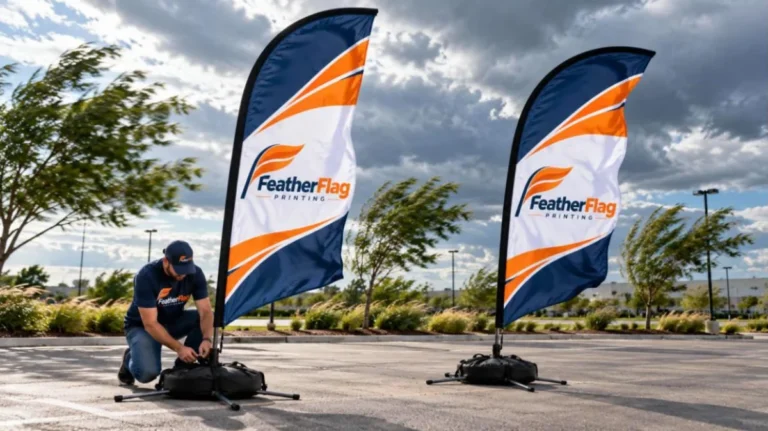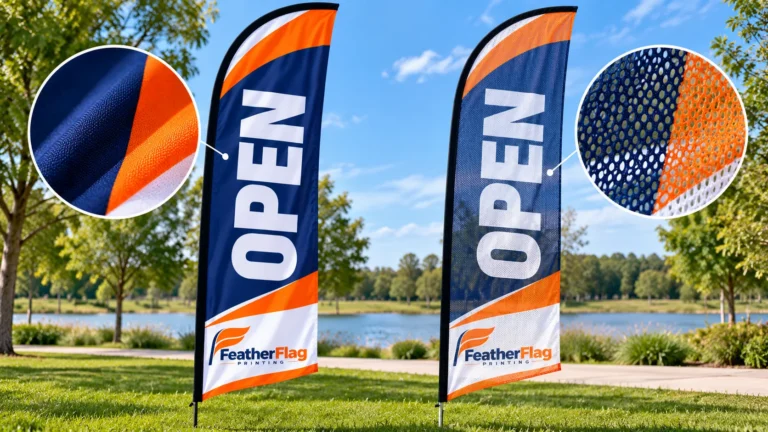
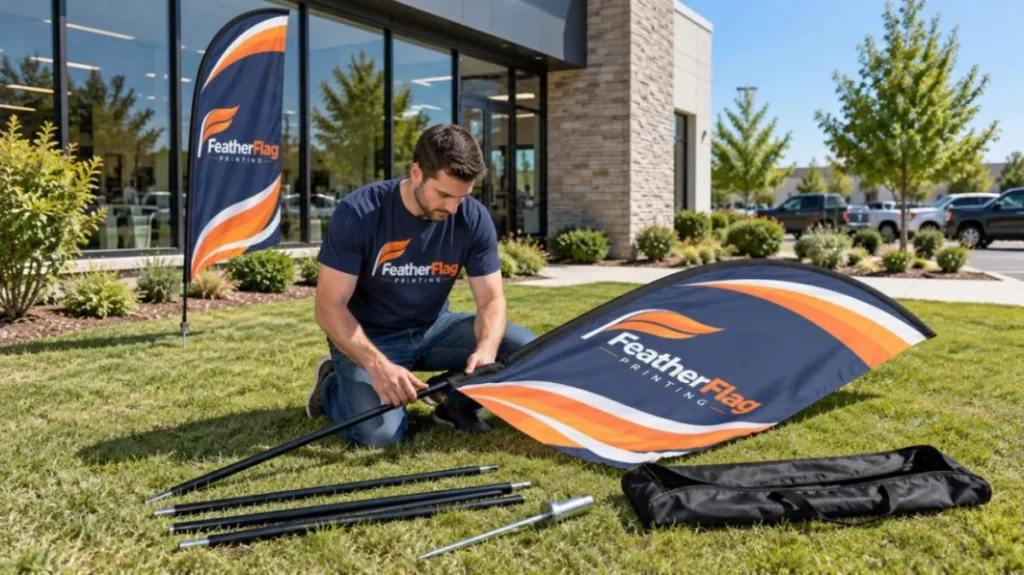
A feather flag usually takes 3 to 5 minutes to set up. To install one, connect the pole sections, attach the flag fabric, choose the correct base, secure the flag, and check that it stands straight and rotates properly.
A properly installed feather flag creates a clear and attractive display for businesses, events, trade shows, retail spaces, and outdoor promotions. Incorrect setup can lead to problems such as a leaning pole, twisted fabric, poor visibility, or an unstable base.
This guide explains the complete feather flag installation process, including choosing the right location, assembling the pole, attaching the fabric, selecting the correct base, solving common problems, and storing your flag properly.
Before You Install Your Feather Flag, Know the Main Parts
Understanding the different parts of a feather flag kit makes installation easier and helps prevent mistakes.
Feather Flag Fabric
The feather flag fabric is the printed section that displays your logo, message, or promotional design. Most flags use lightweight polyester because it moves easily with airflow while keeping the design visible.
The curved shape of the fabric creates the feather style appearance and helps the flag stand out from a distance.
Feather Flag Pole Sections
The pole supports the fabric and keeps the flag upright. Most feather flag poles are made from fiberglass, aluminum, or a combination of both materials.
Fiberglass poles are flexible and designed to handle regular movement caused by wind, while aluminum poles can provide additional strength for certain applications.
Each pole section connects together to create the complete support structure.

Flag Sleeve and Attachment Points
The flag sleeve is the fabric channel where the pole slides through. It keeps the flag attached while helping maintain its correct shape.
Most feather flags include:
- A top attachment point that secures the upper part of the flag
- A bottom strap or bungee connection that keeps the fabric stretched
Proper tension helps the flag remain visible and prevents loose fabric from affecting its appearance.
Ground Spike, Cross Base, and Rotating Connector
The base system keeps your feather flag stable after installation.
A ground spike is designed for soft surfaces such as grass and soil, while a cross base is used for hard surfaces like concrete and indoor floors.
The rotating connector allows the flag to move with changing wind direction instead of wrapping around the pole.
Where Should You Place a Feather Flag?
Choosing the right location before installation improves visibility and helps keep your feather flag stable.
A good location should provide:
- Clear visibility from approaching customers or visitors
- Enough open space for the flag to move freely
- A suitable surface for the selected base
- Safe distance from walls, vehicles, and walkways
Common locations include:
- Store entrances
- Parking areas
- Outdoor events
- Real estate properties
- Trade show areas
Avoid placing feather flags in narrow spaces between buildings or areas where wind changes direction suddenly because this can create extra pressure on the pole and base.
For a single sided feather flag, position the printed side toward the main viewing direction. A double sided feather flag is useful for locations where people approach from multiple directions.
Choose the Right Base and Installation Method
The correct base depends on where your feather flag will be installed.
| Location | Recommended Base |
|---|---|
| Grass or soil | Ground spike |
| Concrete or pavement | Cross base with weight support |
| Indoor spaces | Weighted base or cross base |
| Wind exposed areas | Heavy duty base with additional support |
Installing a Feather Flag on Grass or Soil
For outdoor ground installation:
- Push the ground spike straight into the soil.
- Make sure the spike is stable.
- Attach the rotating connector.
- Insert the feather flag pole.
The spike should remain vertical to prevent the flag from leaning.
Installing a Feather Flag on Concrete
For sidewalks, entrances, and paved areas:
- Open the cross base completely.
- Place it on a flat surface.
- Add a water bag or additional weight if needed.
- Attach the pole connector.
- Insert the feather flag pole.

Installing a Feather Flag Indoors
Indoor locations such as exhibitions, conferences, and retail stores require a stable base without a ground spike.
Use:
- Weighted bases
- Cross bases
- Floor safe support systems
Always check ceiling height and keep the display away from busy walkways.
How to Assemble the Feather Flag Pole
Once the location and base are ready, assemble the pole carefully.
Follow these steps:
- Lay the pole sections on a clean surface.
- Connect each section in the correct order.
- Make sure every connection is fully inserted.
- Attach the flexible top section.
Avoid forcing the sections together because damaged connectors can affect the stability of your feather flag.
How to Attach the Flag Fabric Correctly
After assembling the pole, attach the fabric to create the correct shape.
- Slide the pole through the flag sleeve.
- Connect the top attachment point.
- Secure the bottom strap or bungee.
- Adjust the tension until the fabric is evenly stretched.
A correctly attached feather flag should have a smooth curve and display the design clearly.
Final Feather Flag Setup Checklist
Before leaving your feather flag installed, check:
- The pole stands straight
- The base is stable
- The flag rotates freely
- The fabric is properly stretched
- All connections are secure
A quick inspection helps prevent most installation problems.
Common Feather Flag Problems and Solutions
Why Is My Feather Flag Leaning?
A leaning feather flag is usually caused by:
- Uneven ground
- Incorrect base placement
- Loose pole connections
Check the base position and make sure all pole sections are connected properly.
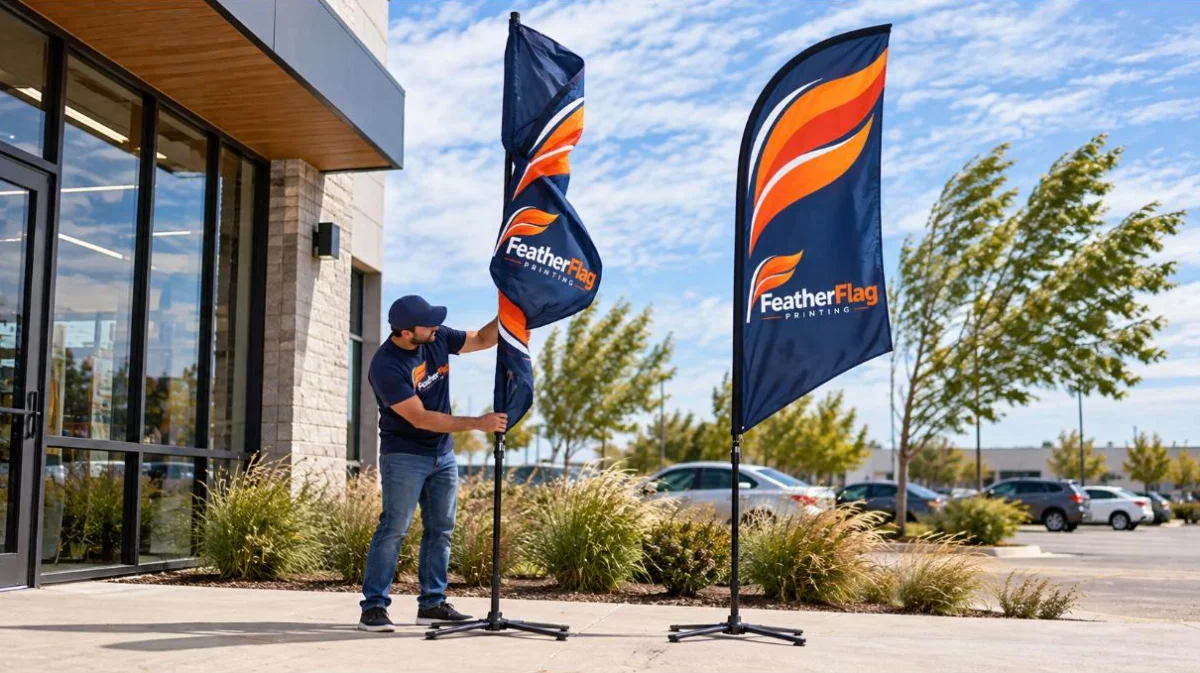
Why Does My Feather Flag Wrap Around the Pole?
This can happen when:
- The rotating connector is not working correctly
- The flag is exposed to strong wind
- The installation is not aligned properly
Check the connector and make sure the flag can rotate freely.
Why Is My Feather Flag Falling Over?
Common causes include:
- A base that is too light
- Wrong base type for the surface
- Strong weather conditions
Use a stronger base or additional weight support when necessary.
When Should You Remove a Feather Flag Due to Weather?
Feather flags are designed to move with airflow, but extreme weather can damage the fabric, pole, and base.
Remove your feather flag during:
- Strong storms
- Severe wind conditions
- Heavy weather events
For long term outdoor use, inspect the pole connections, fabric, and base regularly.
How to Store a Feather Flag After Use
Proper storage helps extend the life of your feather flag.
Follow these steps:
- Remove the pole from the base.
- Separate the pole sections carefully.
- Remove the fabric sleeve.
- Allow the flag to dry before storing.
- Keep the parts in a safe storage bag or container.
Avoid storing a wet feather flag because moisture can damage the fabric over time.