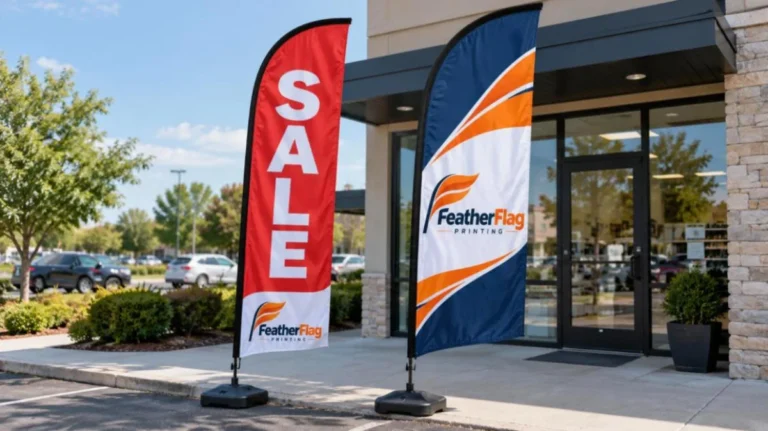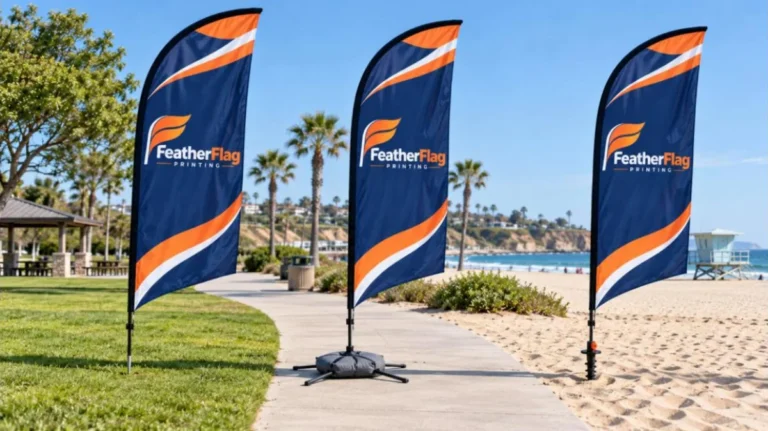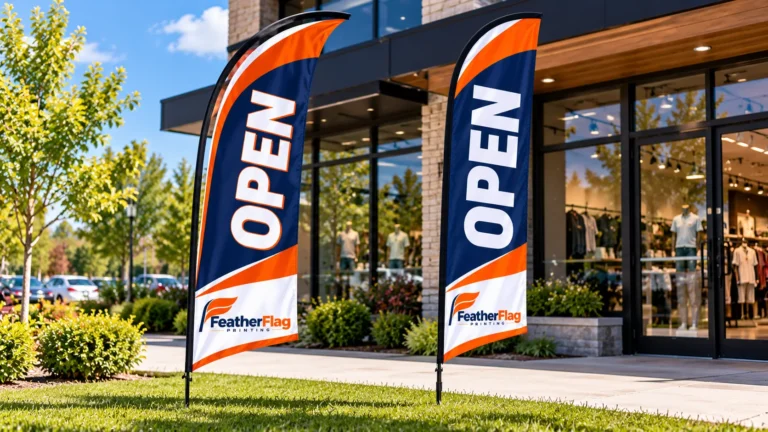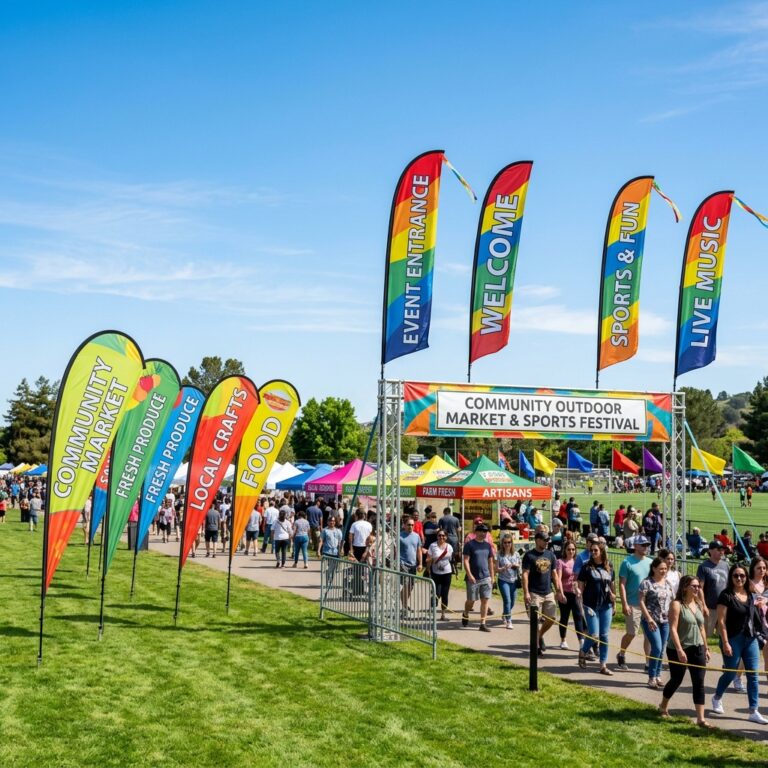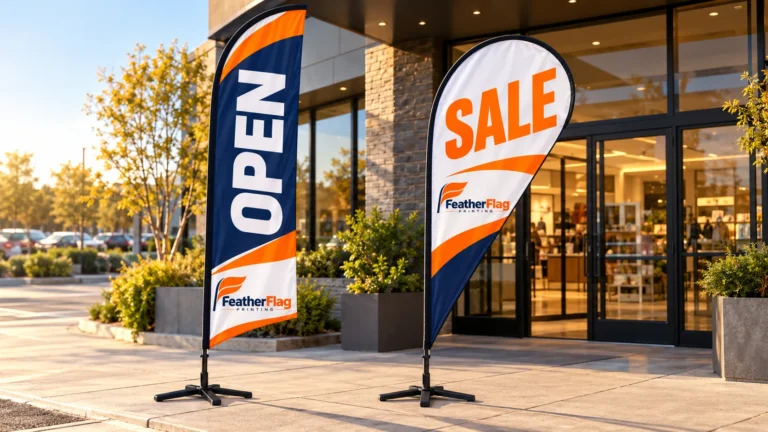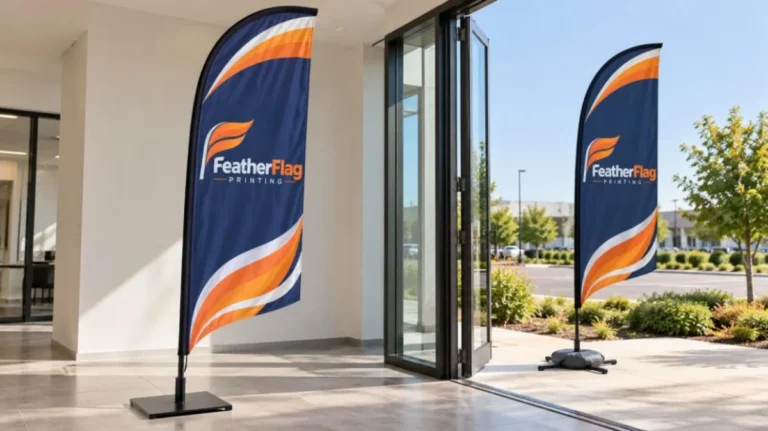
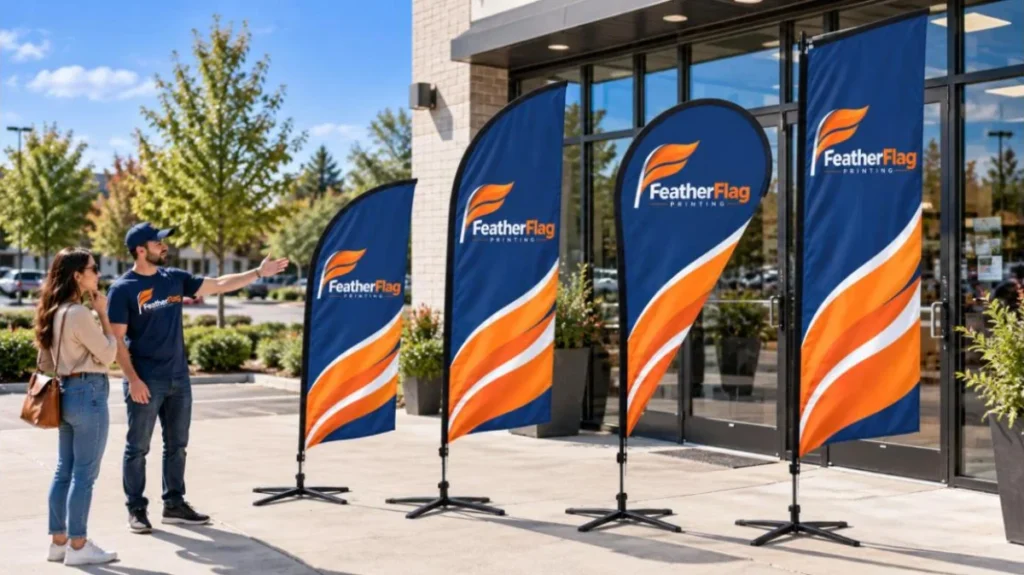
Choosing a feather flag for your business is about more than picking a size and adding your logo. The right setup depends on where you will use it, how far away people need to see it, how often you plan to display it, and what kind of surface it will stand on.
Whether you need one flag for your storefront, several for different locations, or a set for regular promotions, understanding these choices before you order can help you choose a setup that fits your business instead of simply choosing the cheapest or largest option.
The Short Answer
Start with four things: where the flag will be used, how far away people will see it, how often you will use it, and how you will install it. These factors help determine the right size, base, printing style, fabric, and hardware for your needs.
Know What You Need Before You Buy
Before comparing products, think about how the flag will actually be used. A flag displayed every day outside a storefront has different requirements from one used for a weekend event.
Your buying decision becomes easier when you know:
- Where the flag will be displayed
- How far away people will see it
- How frequently you will use it
- Whether it needs to be moved
- Whether you need one flag or several
This prevents you from paying for features that may not benefit your particular use.
Choose a Size That Fits Your Location
The right size depends on your available space and viewing distance. A smaller flag can work well indoors, near an entrance, or where people will be close to the display. Outdoor areas such as parking lots, roadsides, and open event spaces may require a taller flag to remain noticeable from farther away.
Text size matters too. A commonly used 1:10 visibility guideline suggests that roughly one inch of letter height corresponds to about ten feet of viewing distance. For example, 10 inch lettering corresponds to approximately 100 feet. Actual readability can vary with font, contrast, lighting, movement, and viewing angle.
Check our feather flag size buying guide for more help choosing the appropriate size.
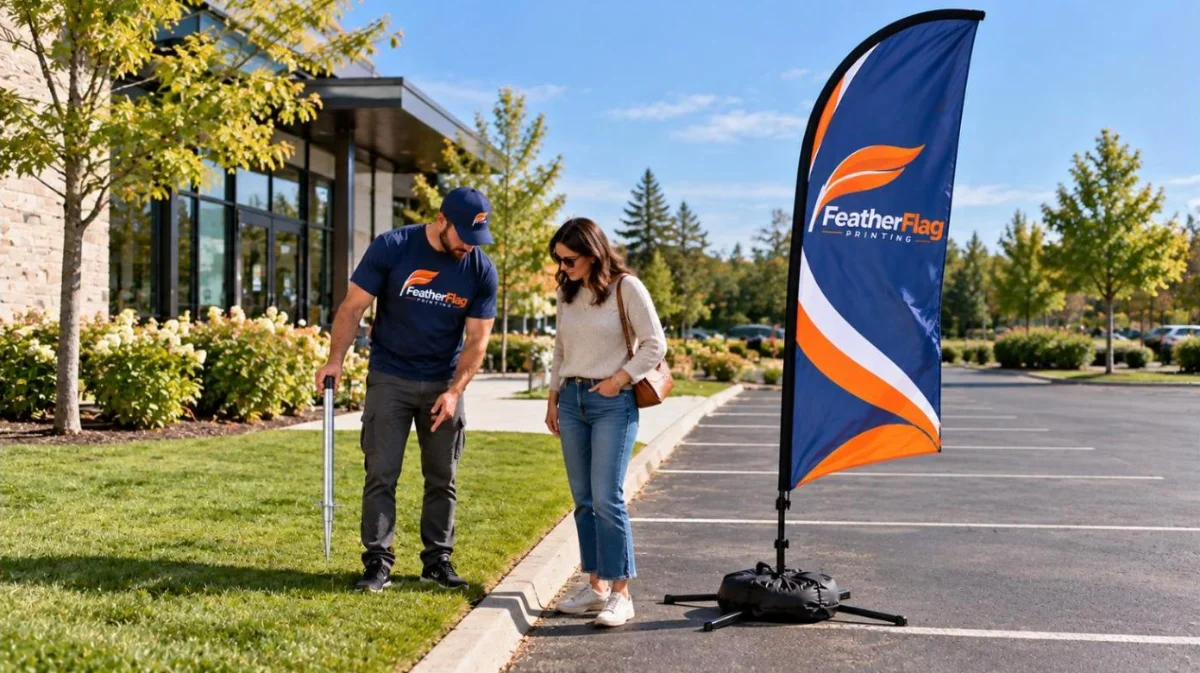
Match the Base to the Ground
The surface where you plan to install the flag should determine your base choice.
| Display Location | Suitable Base Type |
|---|---|
| Grass or soil | Ground stake |
| Concrete or pavement | Cross or flat base |
| Indoor flooring | Suitable flat base |
| Exposed outdoor area | Weighted base option |
| Frequently moved locations | Portable base option |
A ground stake works with compatible soft ground, while hard surfaces require a base that sits on top of the surface. Additional weight can be useful where greater stability is needed.
If you move your flags regularly, consider how easily the base can be transported and repositioned.
Set Up Your Flag Correctly
Once you have the right base, installation is simple. Choose a clear location, secure the base, assemble the pole, attach the flag, and check that it has enough room to move freely.
Keep the setup away from vehicles, walls, branches, walkways, and other objects that could interfere with the fabric. A properly positioned flag is easier to maintain and can move as intended.
Pick the Right Flag Shape
Feather flags come in different shapes and profiles, and each creates a slightly different appearance.
Your choice can depend on the amount of printable space you want, the look you prefer, and how the flag will fit with your existing displays.
For a business using flags across several locations, choosing one consistent shape can also help create a more uniform appearance. The important thing is to select a shape that works with your message and location rather than choosing based only on appearance.
Single Sided or Double Sided?
The best printing option depends on how people approach your flag.
A single sided flag is lighter and allows the fabric to move freely. It can work well when viewers mainly approach from one direction, and the reverse side may show a mirrored version of the design.
Double sided construction provides a correctly readable design on both sides. It can make more sense for open areas, walkways, parking lots, and locations where people approach from different directions.
Choose based on viewing direction, not simply on which option has more features.
Choose Fabric for Your Expected Use
Fabric quality matters more when a flag will be used frequently or exposed to outdoor conditions.
Polyester is commonly used for feather flags because it is lightweight and works well with dye sublimation printing. Different products can vary in fabric weight and construction, so compare the specifications rather than relying only on general descriptions such as “premium” or “durable.”
For occasional events, your requirements may be different from those of a business displaying a flag regularly throughout the year.
Make Sure the Printing Fits Your Purpose
Dye sublimation is widely used for feather flags because the dye becomes part of the fabric instead of simply sitting on the surface.
For a business buyer, the important question is how the printing works with the complete product. Consider the fabric, color quality, intended use, and whether you need the design to read from one side or both.
A good printing method should support clear communication without adding unnecessary weight to the flag.

Keep Your Artwork Easy to Read
A feather flag has a curved profile, so it does not provide the same design area as a flat banner.
Keep your main message simple and avoid placing important information too close to the pole sleeve or outer edge. The fabric moves, so artwork positioned too close to these areas may become less noticeable.
Before submitting artwork, use the supplier’s template when available and carefully review any digital proof before production.
Consider Wind and Weather
Outdoor conditions can affect both the fabric and hardware. A flag placed in an exposed parking lot may experience different conditions from one positioned beside a sheltered storefront.
Do not rely on one universal wind rating when comparing products. Check the supplier’s guidance for the specific flag and base you are purchasing, and understand when the flag should be taken down during severe weather.
Matching the setup to its environment is more useful than simply choosing the strongest looking product.
Give Your Flag Room to Move
Placement affects both visibility and product life.
Avoid positioning the flag where the fabric repeatedly rubs against walls, vehicles, branches, signs, or other objects. Give the flag enough open space to move naturally.
Before installation, also check the surrounding area for overhead obstacles and make sure the display does not interfere with traffic, entrances, or important signs.
Plan for Storage and Reuse
If your business uses feather flags for occasional promotions, proper storage becomes part of getting good long term value from the setup.
Follow the manufacturer’s cleaning and drying instructions before storing the flag. Keep the fabric and hardware protected from unnecessary moisture and damage when they are not being used.
If you regularly change your promotional message, a reusable pole and base system can also make replacing the printed fabric more convenient.
Buying for Multiple Locations?
Buying several flags requires more planning than ordering one.
Your branding should remain consistent, but each location may have different space, ground surfaces, viewing distances, and installation conditions. That means identical artwork does not always mean identical hardware.
For larger orders, ask about quantity pricing, production requirements, artwork specifications, and delivery times before placing the order.
If you are buying for several locations, a franchise, agency, or reseller project, Request a Quote to discuss your requirements.
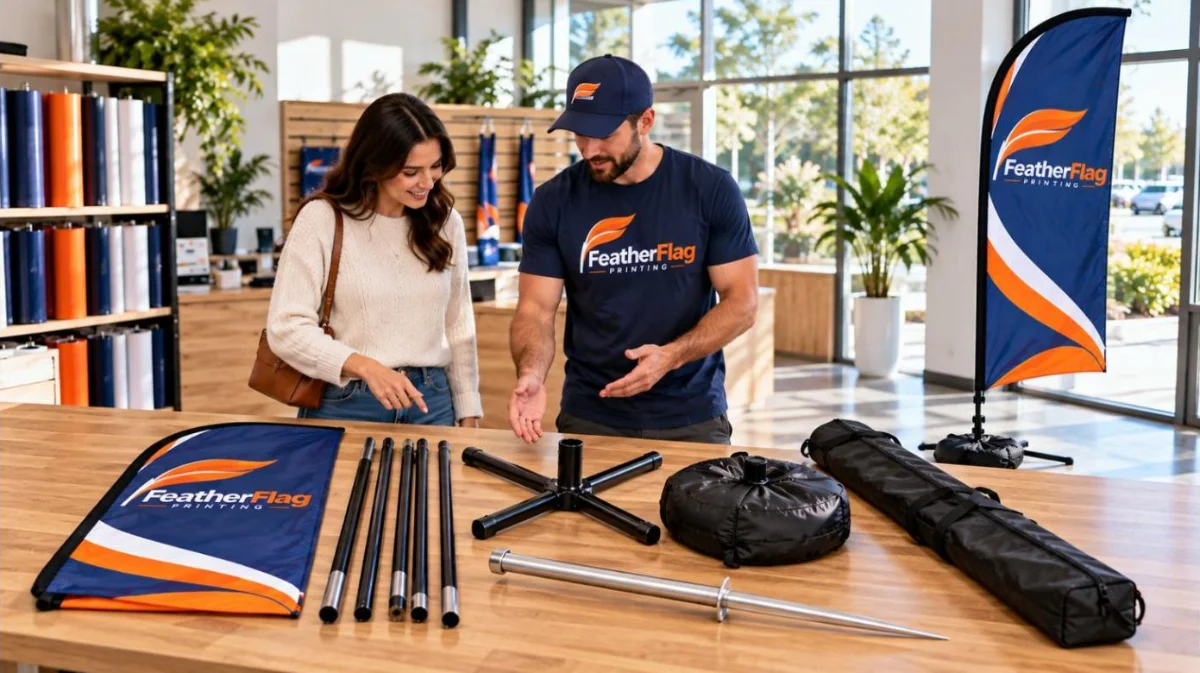
Compare the Complete Cost
The lowest flag price is not always the lowest overall cost.
Before comparing suppliers, check what is included in the package and whether you will need to purchase additional hardware. A reusable pole and base can also add value if you expect to change the printed message over time.
Think about how often you will use the flag, how many campaigns it will support, and whether the hardware can be reused. This gives you a better basis for comparing value than looking at the initial price alone.
Check What Comes With Your Order
Before placing an order, make sure you know exactly what you are receiving.
| What to Check | Why It Matters |
|---|---|
| Printed flag | Confirms the fabric and printing are included |
| Pole | Confirms the required support system |
| Base | Ensures you can install it at your location |
| Carrying bag | Makes transport and storage easier |
| Hardware | Prevents unexpected additional purchases |
| Artwork requirements | Helps avoid production problems |
| Warranty | Clarifies available support |
| Production time | Helps you plan your campaign |
| Delivery time | Ensures the order arrives when needed |
Two products with similar prices may include different components, so always compare the complete package.
Check Local Requirements Before Installation
Before placing a feather flag outside your business, check whether your landlord, property manager, event organizer, or local authority has restrictions on temporary displays.
Rules can vary by location and may cover placement, size, number of displays, or how long a flag can remain outside.
Checking these requirements before ordering can help you avoid choosing a setup that cannot be used where you planned to install it.
Ready to choose the right feather flag for your business? Start with your location, viewing distance, ground surface, weather conditions, and intended use. If you are ordering for multiple locations or need help selecting the right setup, Request a Quote to discuss your requirements.