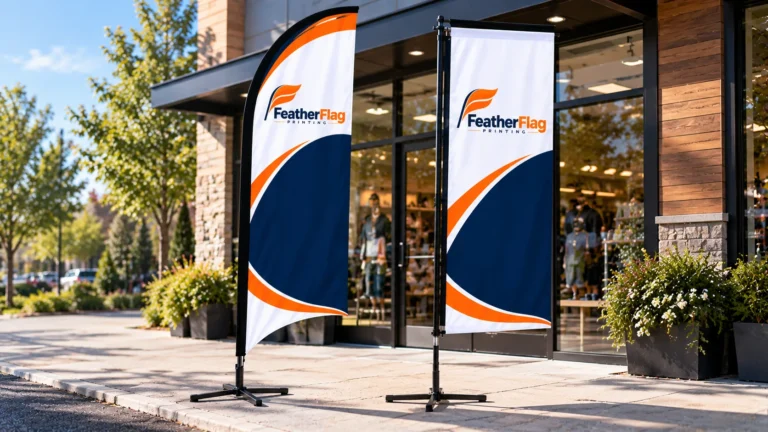
Feather flags are a powerful way to attract attention at outdoor events, storefronts, festivals, trade shows, and promotional areas. However, a successful display depends on more than simply connecting the pole and attaching the flag.
The surface where you install your feather flag determines the support system you need and how stable it will remain outdoors. A ground spike works well in soil, a weighted base is needed for concrete, and sandy locations require deeper anchoring.
This guide explains how to install feather flags on grass, concrete, and sand, how to choose the correct base, and how to keep your display secure in different outdoor conditions.
To install a feather flag, assemble the pole sections, attach the flag sleeve, and choose a base designed for your surface. Use a ground spike for grass, a weighted cross base for concrete, and a sand spike for sandy areas. After setup, make sure the pole is secure and the flag can rotate naturally with changing wind conditions.
Feather Flag Installation Checklist Before Setup
Before installing your feather flag, prepare both the location and equipment.
Check:
- The surface where the flag will stand
- The correct base for that surface
- Weather conditions
- Pole sections and connectors
- Flag sleeve attachment
- Available space around the display
A proper check before installation helps prevent unstable setups, damaged hardware, and poor flag movement.
Understanding Feather Flag Components Before Installation
Knowing how each part works makes installation easier and helps you maintain your display.
Flag Fabric
The fabric creates the visible advertising area and is designed to move naturally with wind.
Pole Sections
The pole sections connect together to create the structure and height of the flag.
Flag Sleeve
The sleeve holds the fabric securely along the pole while maintaining the feather shape.
Rotating Connector
The rotating connector allows the flag to move with the wind instead of resisting airflow. This reduces stress on the pole and fabric.
Base System
The base provides support and changes depending on the installation surface:
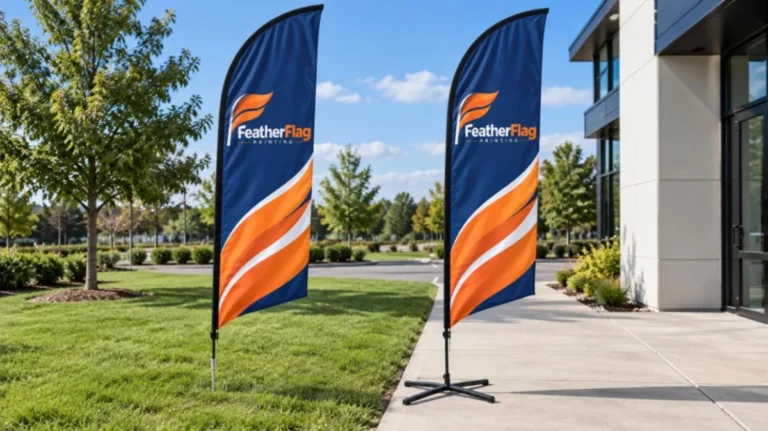
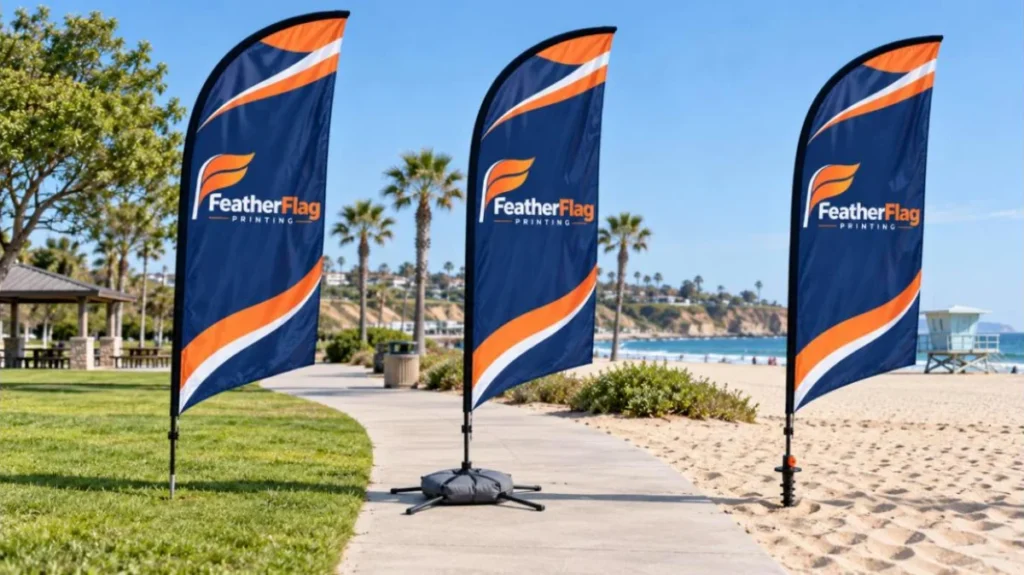
- Ground spike for grass
- Weighted cross base for concrete
- Sand spike for sandy locations
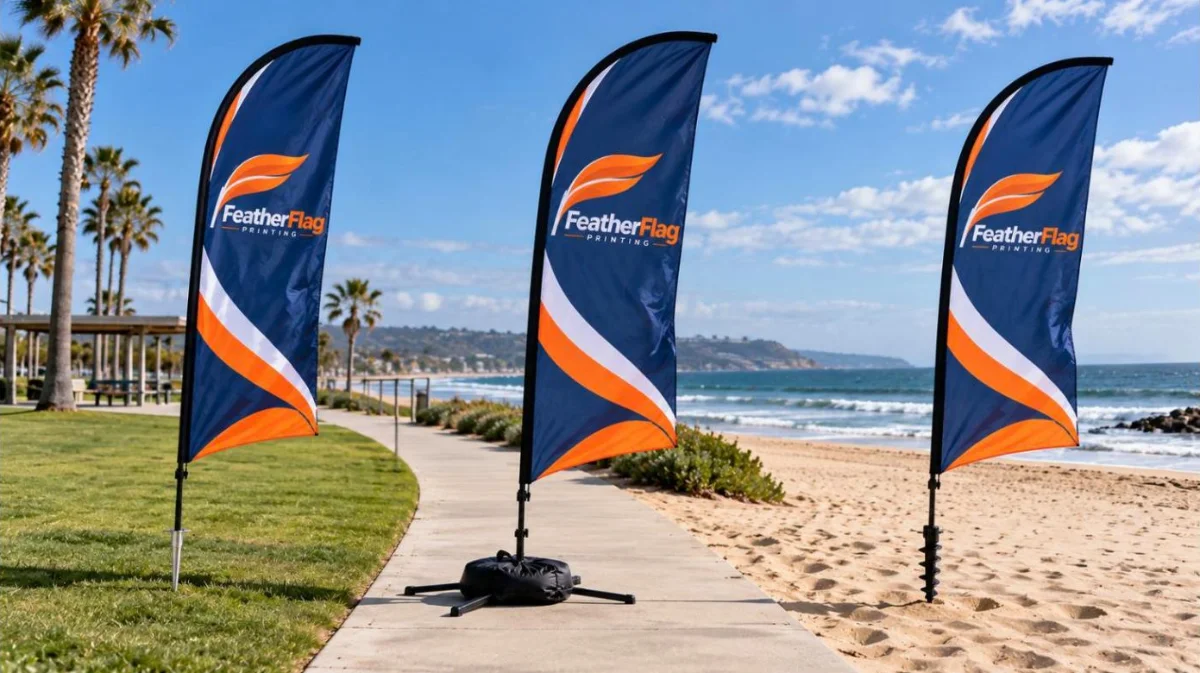
Choosing the Right Feather Flag Base for Grass, Concrete and Sand
The installation surface determines which base will provide the best stability.
| Surface | Recommended Base | Why It Works |
|---|---|---|
| Grass | Ground spike | Anchors directly into soil |
| Concrete | Weighted cross base | Provides support without drilling |
| Sand | Sand spike | Creates deeper support in loose material |
Using the wrong base can cause the flag to lean, move excessively, or become unstable.
How to Install a Feather Flag on Grass Step by Step
Grass is one of the easiest surfaces for feather flag installation because the ground spike can anchor directly into soil.
Assemble the Pole
Connect each pole section securely and make sure all joints are properly fitted.
Attach the Flag Sleeve
Slide the flag sleeve onto the pole and ensure the fabric is positioned correctly without twisting.
Insert the Ground Spike
Push the ground spike firmly into the soil until it provides enough support.
For locations exposed to wind, positioning the spike slightly against the wind direction can improve stability.
Attach the Pole
Secure the assembled pole onto the ground spike connection.
Check the Installation
The flag should stand upright while allowing the fabric to move naturally.
Grass installations are commonly used for:
- Outdoor events
- Festivals
- Sports fields
- Lawn promotions
- Temporary displays
Installing Feather Flags in Different Soil Conditions
The condition of the soil can affect how stable your feather flag remains.
Soft Soil
Soft ground allows easy installation but may require deeper placement to improve support.
Hard Soil
Compact soil may require extra effort during installation. Avoid forcing the spike in a way that could damage the hardware.
Wet Soil
Moist ground can become less stable over time. Check the flag position regularly in these conditions.
How to Install and Stabilize a Feather Flag on Concrete
Concrete surfaces require a different approach because a ground spike cannot penetrate the surface.
A weighted cross base is the most common solution.
Choose a Weighted Cross Base
Select a base designed for outdoor feather flag use.
Add Support Weight
Use water bags, sandbags, or additional weights to prevent movement.
Install the Rotating Connector
Make sure the connector allows the flag to rotate freely.
Attach the Pole
Place the assembled pole into the base connection.
Improve Stability
For better performance on concrete:
- Place the base on a flat surface
- Add extra weight in exposed areas
- Avoid strong wind corridors
- Check the setup during long events
Concrete installations are commonly used for:
- Store entrances
- Parking areas
- Sidewalk displays
- Trade shows
- Business promotions
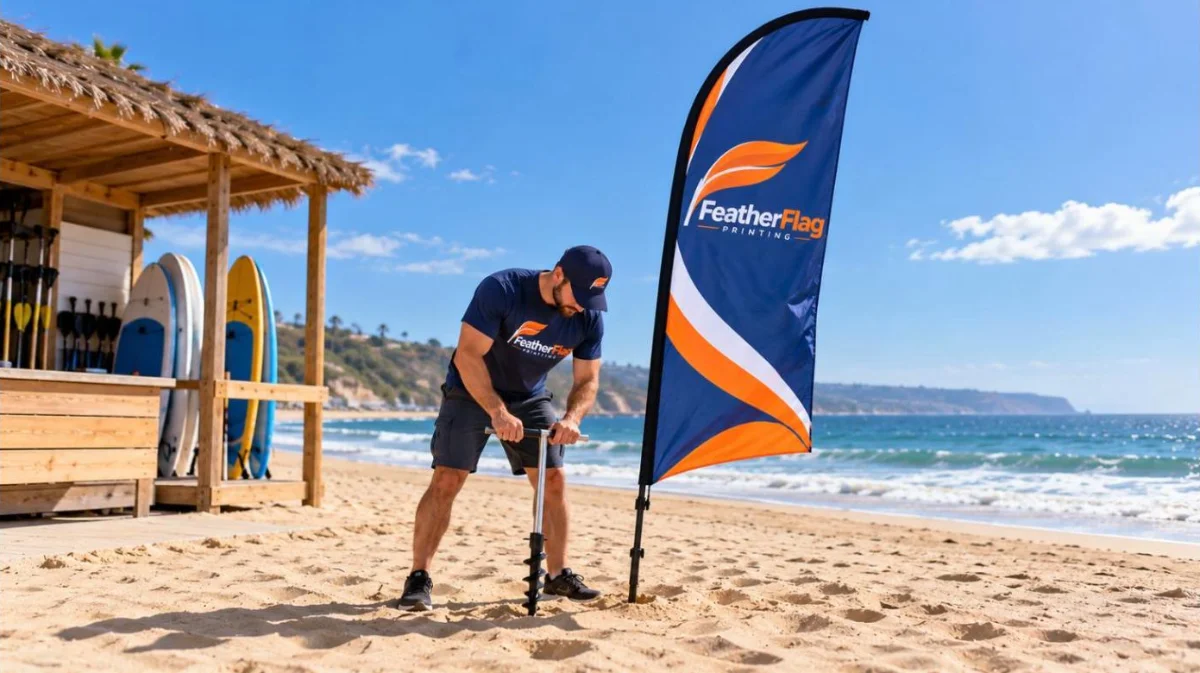
How to Install a Feather Flag on Sand
Sand requires a different installation method because it shifts more easily than soil.
A sand spike provides better support by creating deeper anchoring in loose surfaces.
Choose a Sand Spike
Use a spike designed specifically for sandy environments.
Push the Spike Deep Into the Sand
Greater depth helps improve grip and reduces movement.
Secure the Surrounding Sand
Press sand firmly around the spike to improve stability.
Attach the Pole
Connect the pole and check that the flag remains upright.
Monitor Stability
Sand conditions can change because of wind, moisture, and foot traffic. Check the installation regularly during use.
Sand installations are ideal for:
- Beach promotions
- Coastal events
- Outdoor festivals
- Summer campaigns
How Wind Affects Feather Flag Installation
Feather flags are designed to move with wind rather than resist it.
The rotating connector helps reduce pressure on:
- Pole sections
- Fabric stitching
- Base connection points
Avoid restricting the movement of the flag because a fixed flag experiences more stress during changing weather conditions.
For stronger wind situations:
- Add additional support where possible
- Inspect the base regularly
- Remove the flag during severe weather
Common Feather Flag Installation Mistakes
Choosing the Wrong Base
Each surface requires a specific support system. A ground spike designed for soil will not provide proper support on concrete.
Ignoring the Installation Area
Uneven surfaces, loose soil, and unstable locations can affect the final setup.
Skipping Hardware Checks
Loose pole sections or incorrect connections can reduce stability.
Blocking Natural Rotation
Preventing the flag from moving freely increases stress on the structure.
Ignoring Weather Conditions
Strong wind and harsh conditions can damage the flag if proper precautions are not taken.
How to Fix Feather Flag Problems After Installation
Why Is My Feather Flag Leaning?
A leaning flag may be caused by:
- Uneven placement
- Loose connections
- Incorrect support
- Surface movement
Check the base and pole connections to restore proper alignment.
Why Does My Feather Flag Keep Falling Over?
Common causes include:
- Insufficient support
- Incorrect base selection
- Changing ground conditions
Improving the support system usually solves the problem.
Why Is My Feather Flag Not Rotating?
Possible causes include:
- Blocked rotating connector
- Incorrect assembly
- Damaged moving parts
The flag should rotate naturally when wind passes through the fabric.
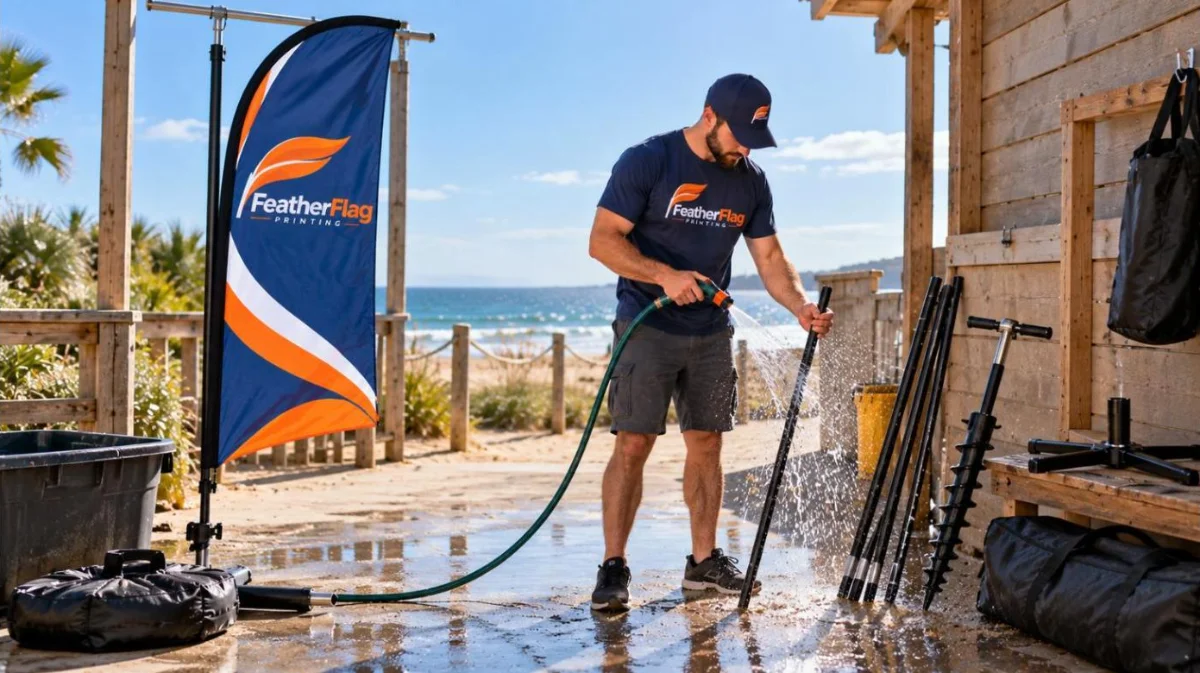
Feather Flag Care After Installation
Clean the Fabric
Remove dirt and outdoor buildup to maintain the appearance of your display.
Store Components Properly
Allow the flag to dry before storage and protect the pole sections from damage.
Inspect Hardware Regularly
Check:
- Pole connections
- Rotating parts
- Base condition
Regular inspection helps prevent unexpected problems.
Feather Flag Installation Comparison: Grass vs Concrete vs Sand
| Feature | Grass | Concrete | Sand |
|---|---|---|---|
| Base Type | Ground spike | Weighted cross base | Sand spike |
| Installation Difficulty | Easy | Medium | Moderate |
| Main Challenge | Soil stability | Weight support | Sand movement |
Final Thoughts
Installing a feather flag correctly starts with understanding your installation surface. Grass, concrete, and sand each require a different approach to create a stable and professional display.
A ground spike provides reliable support on grass, a weighted cross base keeps flags secure on concrete, and a sand spike helps maintain stability in loose outdoor areas.
By choosing the right base, allowing natural flag movement, and checking your setup regularly, you can keep your feather flag standing securely and looking professional at events, businesses, and outdoor promotions.