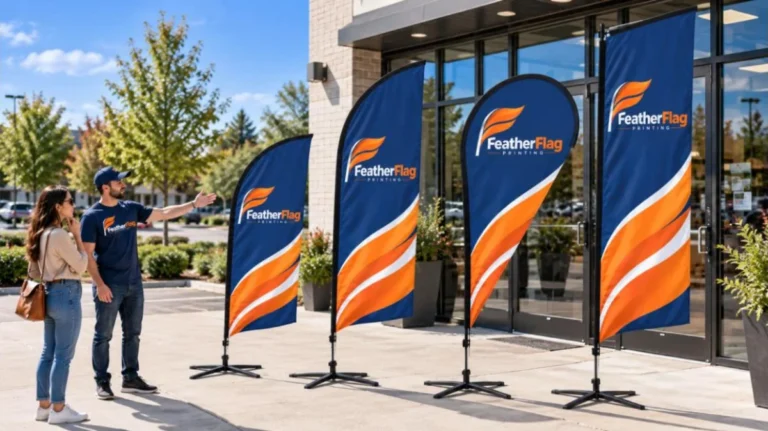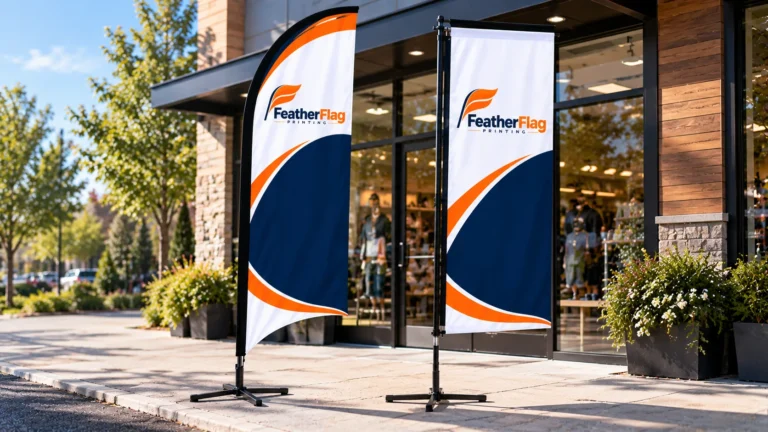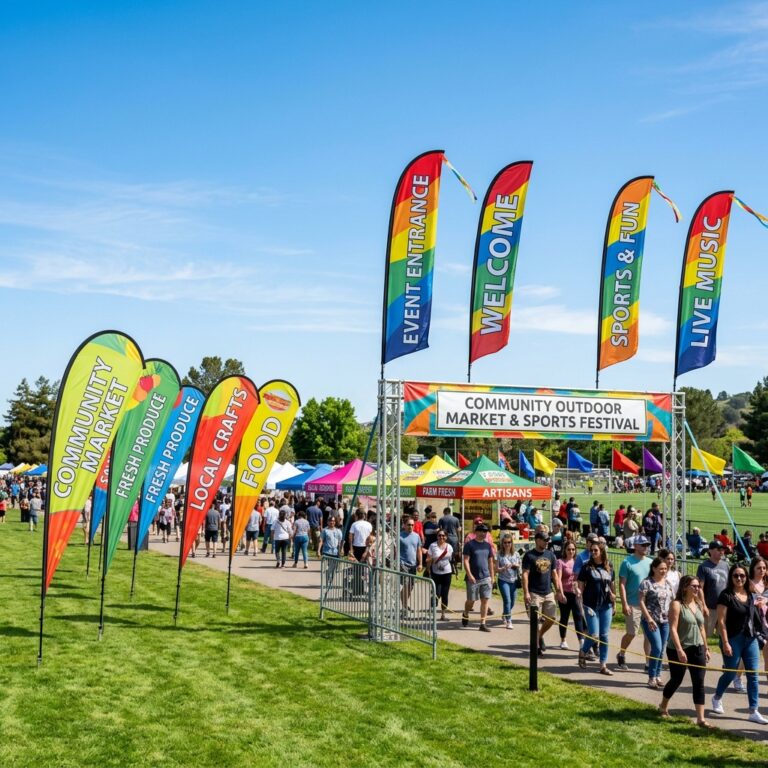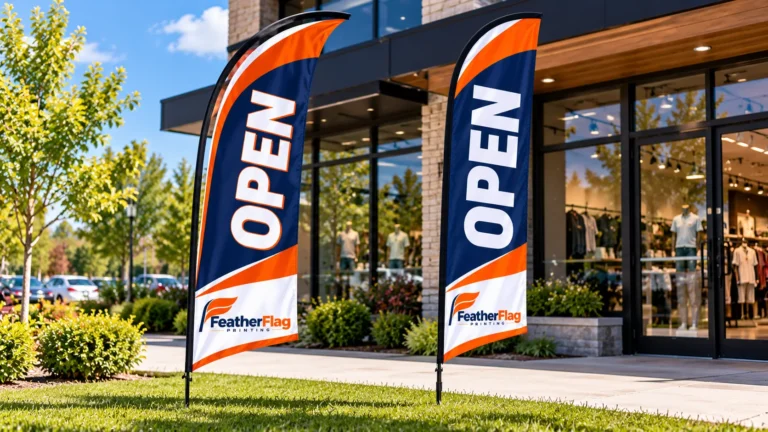
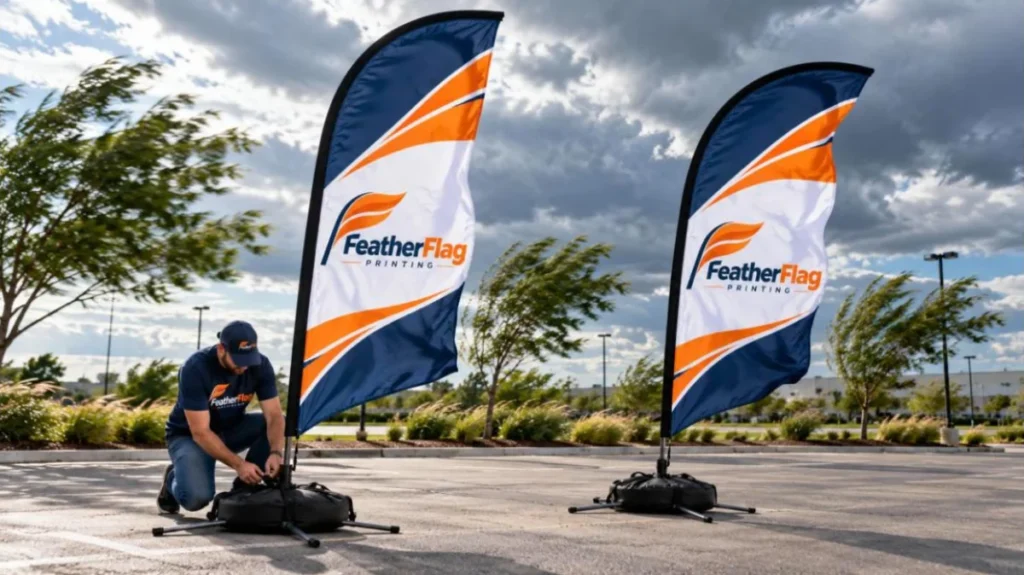
Feather flags are one of the most effective outdoor advertising displays because their movement naturally attracts attention. However, strong wind can quickly turn a well designed display into a problem if the setup is not prepared correctly. A flag that keeps leaning, twisting around the pole, or moving the base across the ground usually has stability issues caused by incorrect installation, unsuitable hardware, or poor placement.
The best way to keep a feather flag stable in windy conditions is to use the correct base for the surface, add enough weight when needed, choose suitable materials, install the pole correctly, and place the flag where wind pressure is manageable. A stable setup allows the flag to move naturally without putting excessive stress on the structure.
Wind performance is not controlled by one single feature. The feather flag material, base system, pole design, flag size, and installation environment all influence how well the display performs outdoors.
Why Feather Flags Become Unstable in Wind
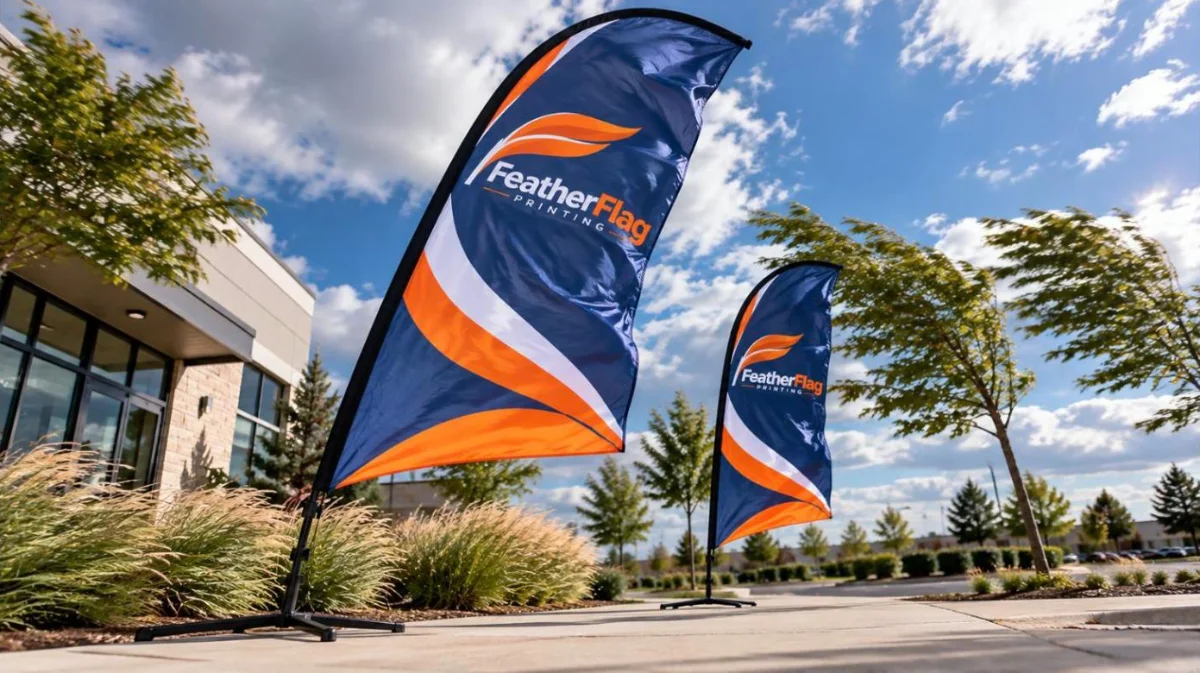
A feather flag is designed to move with airflow, not resist it completely. This movement helps reduce pressure because the fabric can follow the direction of the wind.
Problems begin when the wind force becomes greater than the support system can handle.
Common reasons a feather flag becomes unstable include:
- The base does not provide enough support
- The flag size is too large for the location
- The pole connections are loose
- The rotating mechanism cannot move freely
- The installation surface is uneven
- The display is placed in an area with concentrated wind
For example, a flag installed between tall buildings may experience stronger gusts than the same flag placed in an open area because surrounding structures can redirect airflow.
Understanding the cause of instability makes it easier to choose the right solution.
1. Select the Right Base for Your Outdoor Surface
The base is the main support point of any feather flag setup. The correct choice depends on where the flag will be installed.
A ground spike base works well for grass, soil, and softer outdoor surfaces. Since the spike enters the ground, it creates direct support and helps prevent movement.
A cross base is commonly used on hard surfaces such as pavement, concrete, and event spaces. Since these surfaces cannot hold a ground spike, the base often requires additional weight for better stability.
For locations where maximum support is required, a heavier square steel base can provide better balance. These bases are useful for business locations where flags remain installed for longer periods.
The important factor is matching the base design with the installation environment. A base that works well on grass may not provide the same performance on concrete.
2. Add Weight When Wind Exposure Increases
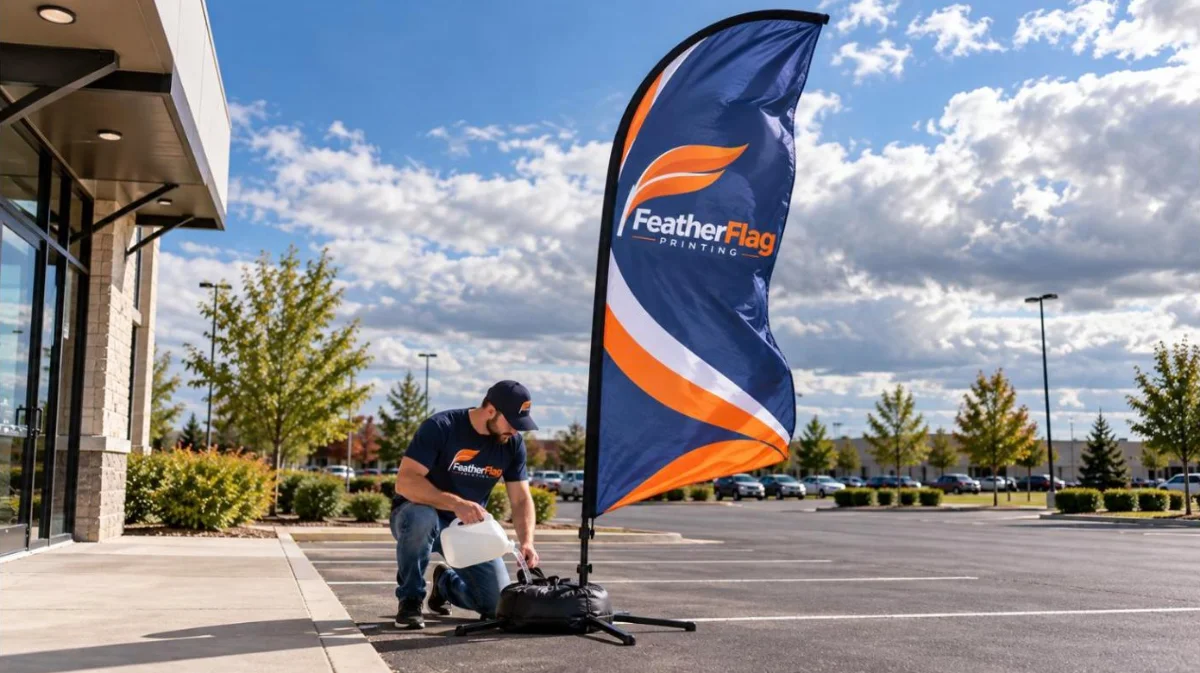
A portable base may need additional support when the flag is installed in an exposed location.
Adding weight helps keep the base in position by reducing movement caused by wind pressure.
Popular options include:
Water bags
Water filled weights are convenient for temporary displays because they are easy to transport and fill when needed.
Sandbags
Sand provides strong support and is useful for longer installations because it remains heavy without the risk of leaking.
Weight plates
Commercial weight systems are suitable for businesses that frequently use outdoor displays and need a more permanent solution.
The amount of additional weight required depends on the flag height, base style, surface type, and local weather conditions.
A small entrance display and a large open area advertising flag will not require the same level of support.
3. Choose Fabric That Matches Your Wind Conditions
The fabric affects how a feather flag handles outdoor conditions. A well constructed flag should balance durability with the ability to move naturally.
Quality polyester feather flags are commonly used because they are lightweight, durable, and suitable for outdoor printing.
When comparing fabrics, look beyond thickness alone. Important factors include:
- Strong stitching
- Reinforced edges
- Reliable attachment points
- Suitable fabric construction
Fabric weight, often measured through GSM, can indicate how dense the material is. However, a heavier fabric does not automatically create better wind performance. The entire display system still needs to be properly matched.
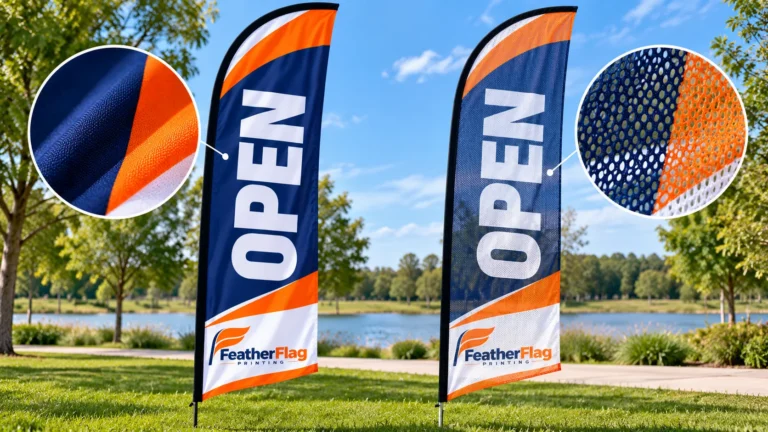
For locations with frequent wind exposure, mesh feather flag material can be a useful option. The small openings allow some airflow to pass through the fabric, reducing resistance compared with a completely solid surface.
Mesh options are often considered for:
- Coastal areas
- Open outdoor spaces
- Locations with regular wind movement
Choosing the right fabric helps reduce stress while keeping the display visually effective.
4. Use a Pole System Designed for Outdoor Movement
The pole determines how the flag responds when wind conditions change.
A fiberglass feather flag pole is popular for windy environments because it can flex with airflow. This flexibility helps absorb movement instead of transferring all force directly to the base.
Aluminum poles are another common choice because they are lightweight and durable. They provide a more rigid structure and can work well when combined with the correct base and installation method.
The connection areas also deserve attention. A strong pole can still perform poorly if the sleeve or attachment points are weak.
Before installation, check:
- Pole sections connect securely
- The sleeve fits correctly
- Attachment areas show no damage
- The pole moves naturally under pressure
A complete pole system improves reliability and reduces unnecessary stress on individual components.
5. Keep the Flag Moving Freely With Wind Direction
One common problem with feather flags is the fabric wrapping around the pole. This usually happens when the flag cannot adjust naturally as wind direction changes.
A rotating feather flag base allows the flag to follow airflow instead of fighting against it.
A properly working rotation system helps:
- Reduce fabric twisting
- Lower stress on the pole
- Improve the lifespan of the display
If a flag repeatedly wraps around the pole, check the rotating mechanism. Dirt, damage, or incorrect installation can prevent smooth movement.
The purpose of rotation is not to stop movement. It is to allow controlled movement that reduces pressure.
6. Install Feather Flags Away From Strong Wind Channels
Even a high quality outdoor feather flag can struggle if it is installed in the wrong location.
Certain areas naturally increase wind speed because structures redirect airflow.
Avoid placing flags:
- Between tall buildings
- Near sharp corners
- Inside narrow spaces
These locations can create sudden gusts that place extra pressure on the base and pole.
A better location usually provides balanced airflow and enough space for the flag to move freely.
Before installation, consider:
- Ground stability
- Surrounding structures
- Typical wind direction
- Daily exposure conditions
A suitable location can improve performance without requiring additional equipment.
7. Select the Right Flag Size for Your Environment
Flag size directly affects wind pressure. A larger feather flag creates more surface area, allowing stronger forces to act on the pole and base.
For locations with frequent wind, choosing a practical size is often better than selecting the largest available display.
A stable windy location setup usually considers:
- Flag height
- Fabric type
- Base strength
- Installation area
For example, a medium sized flag using airflow friendly material may perform better than an oversized flag placed in an exposed area with limited support.
The right size depends on where the flag will be used, not only the visibility goal.
Inspect and Prepare Your Feather Flag Before Outdoor Use
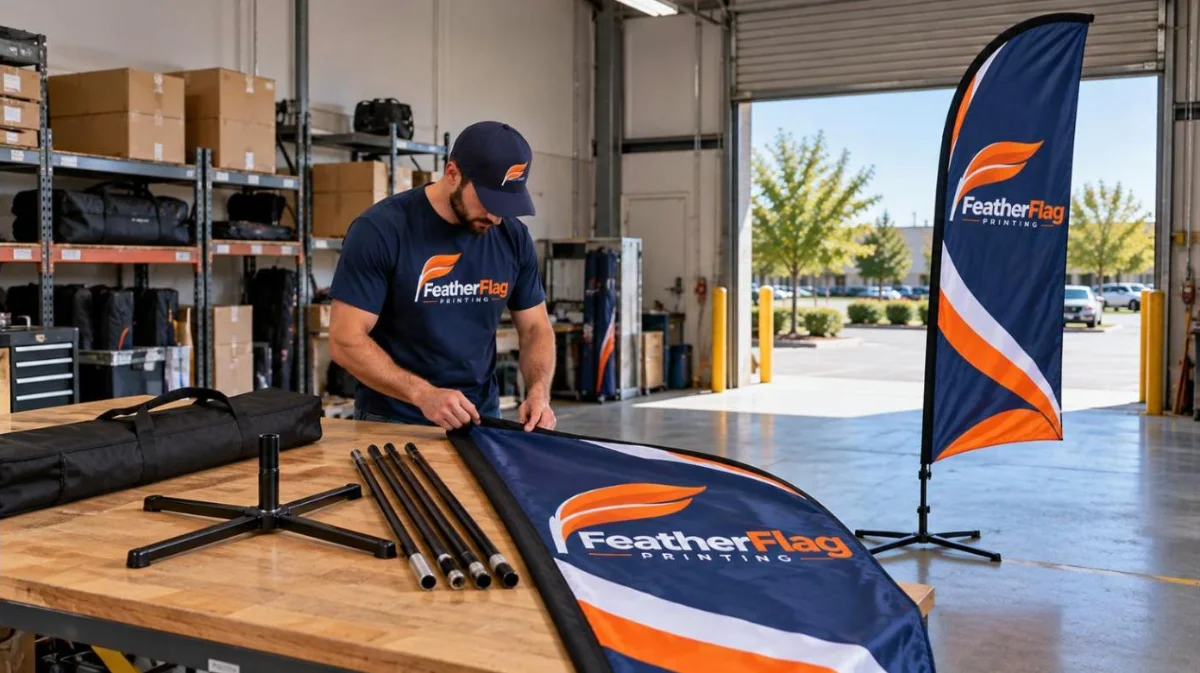
Regular preparation helps maintain feather flag stability and prevents small issues from becoming major problems.
Before installation, inspect the complete display system.
Check:
- Pole connections are secure
- Rotation movement works properly
- Fabric has no damage
- Attachment areas are strong
- Base components are in good condition
After outdoor use, clean the fabric and allow it to dry before storage. Moisture and dirt can reduce material quality over time.
Proper care helps maintain appearance and improves the working life of the display.
Final Thoughts
A stable feather flag is created by matching the display system to the environment where it will be used.
A storefront near a protected entrance may require a different setup compared with an open outdoor event area exposed to regular wind. The most reliable results come from choosing suitable hardware, installing the flag correctly, and understanding the conditions around the display location.
With the right preparation, a feather flag can continue attracting attention while handling normal outdoor movement safely and effectively.